
Introduction: Why Welds are More Important Than You Think
The mechanical seal support systems are the ones that ensure efficient functioning of the pumps and compressors. They are the barriers that stop breaking down seals, reducing the risks of a plant that may have to shut down for repairs. If the whole process is safe, and it saves a lot of money.
There are many things in a system that have a significant role to play, one of which is tubes. In the system diagram, the connecting parts based on the different branches are the welds that are really essential. Imagine a plant that is losing its production not due to broken equipment, but because of just one bad welding job that led to a leak, system failure, and possibly a major accident.
What is a Mechanical Seal Support System?
The systems are designed to supply the mechanical seal with clean, cool, and properly pressurized fluid. This fluid also lubricates the seal and cools it down by taking away heat. The main job of the seal support system is to create the best environment for the seal to work in, thus the equipment will function for a longer period of time, and no costly failures will occur.
These are the networks of pipes, valves, and instruments that work together to keep the main equipment running.
Why Mechanical Seal Support System Welding Is So Important
The pressure relief features of a seal support system increase the risks of leaking. The need for high-quality connections is, therefore, paramount in shielding the leakage of high-pressure lines. In some instances, even a single leak in a joint connection can completely compromise the functional integrity of the entire system.
Recommended industry standards like API 682 emphasize the importance of making high-quality connections. Therefore, the quality of mechanical seal support system welding should definitely be one of the plant’s top priorities.
The Problem: Common Issues with Manual Welding
Until recently, the only way to build these systems was manual welding. But, it has many problems that endanger safety and life. Often, we have encountered the same problems why these projects have failed.
Engineers, as well as maintenance, always try to say something succinctly about the main problem of getting the correct and consistent, high-quality welds. Those problems are the top reasons for the unreliability of the plant and, consequently, associated costs. Reliability in manufacturing a mechanical seal support system is often outside the manual welding capabilities.
Challenge 1: Variations in Quality and Human Error
In manual welding, there may be variations in the quality of the weld from different welders, and, in fact, even from the same welder during a long shift.
Factors such as being tired, working in an uncomfortable position, or having poor lighting can greatly affect the final weld. The result is the system sustainability that is questionable because of the added risk of unknown early failures.
Challenge 2: Material and Contamination Problems
Seal support systems are mostly made of thin-walled, specially alloyed tubing, or stainless steel. But not the type that is easy to weld. Manual welding these materials is very difficult and makes it easy to burn through the wall, or warp the tube.
It can be hard to get an inside tube properly purged with an inert gas too. If it is not done right, then the inside of the weld can become oxidized. Sugar is a term that this is often referred to. These oxides are liable to break off and contaminate the seal fluid. This leads to the quick failure of the mechanical seal.
Challenge 3: Absence of Records and Documentation
It is almost impossible to gain exact data for a manual weld. You know who welded it, but you do not know the exact settings used. This is a big problem for quality control.
For a well-run Quality Assurance plan, it is sometimes necessary to have detailed weld logs for all joints. Hand coding these logs is slow and often incorrect. The absence of logs means that it may only be possible to make guesses at what the root cause of a fault is.
Challenge 4: Skilled Labor Shortage and Safety Risks
Critical systems welding on high-purity needs requires a very high level of skill. Certificate welders that are capable of this work are few and far between and they often cost a lot. This can indeed delay the project.
Besides, tight spots while welding near equipment can be hazardous. Workers get exposed to the electric arcs, heat, and fumes in awkward positions.
The Solution: Circular Welding Automation
In contrast to these setbacks the smart industries have introduced automation. Automated circular welding has become the most favorable option for constructing and servicing these essential systems.
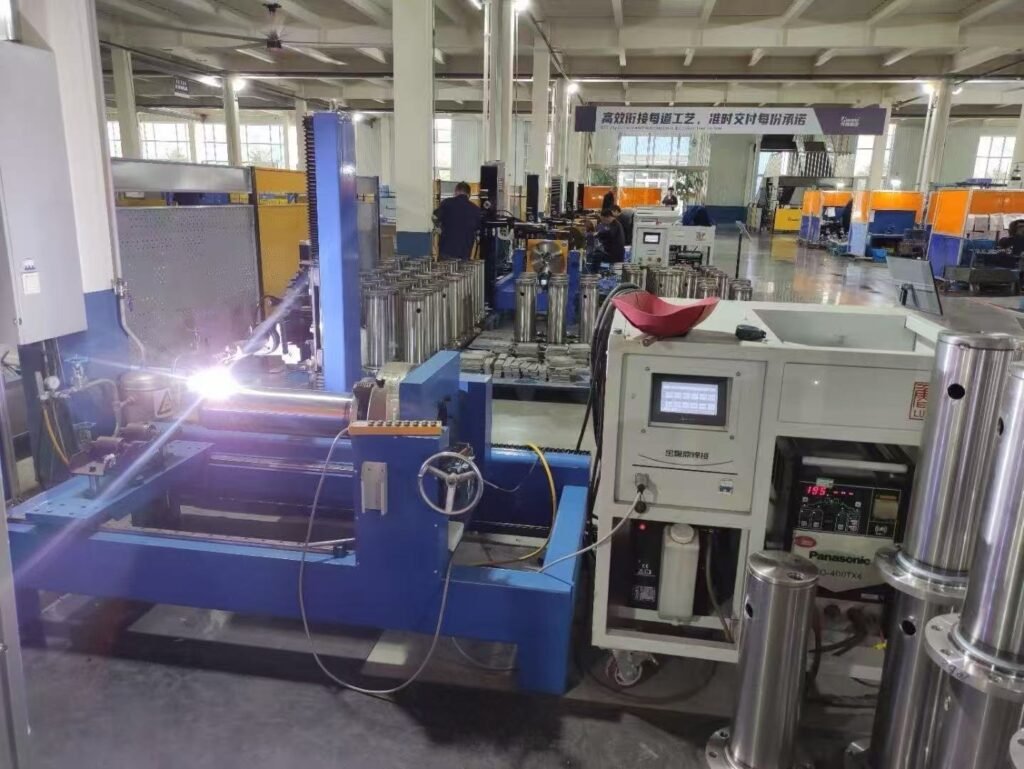
Circular welding is a robotic process. The welding torch stay fixed while the product rotate to be welded. There is a rotating chuck to hold the workpiece and a PLC to store the welding parameters.
There are also orbital welder which welding torch rotates while the workpiece stay fixed. But orbital welder is a bit difficult to have the root pass welding by automation. There are certain limitations. Therefore, the rotating chuck type automated welding machine is currently the ideal solution for mechanical seal support system welding.
The need for welds that were perfect and identical with each patch was then a huge barrier for manual welding, however, the automation welding is the most reliable option for the mechanical seal support system welds. The highest quality seal support systems often incorporate advanced construction methods to guarantee their reliability. Automation is a major part of this process.
Manual vs. Automated Welding: A Side-by-Side Look
Automation advantages are clear when you view manual and automated processes next to each other. This graph shows the difference in a direct comparison for key factors in mechanical seal support system welding which is almost at all points better for automation.
| Parameter | Manual Welding | Automated Orbital Welding |
|---|---|---|
| Weld Consistency | Variable; depends on skill and fatigue. | Extremely high and repeatable (±0.001″). |
| Defect Rate | Higher; prone to human error. | Near-zero when using correct programs. |
| Traceability | Poor; relies on manual logs. | Excellent; full digital logs for every weld. |
| Speed / Efficiency | Slower; includes setup and weld time. | Much faster; reduces total fabrication time. |
| Skill Requirement | Very high; requires certified welder. | Lower; a trained operator can run the machine. |
| Cost per Weld | High due to labor, rework, and inspection. | Lower due to speed, quality, and low rework. |
How Automation Directly Solves the Major Issues
Automated welding does not only optimize the process. It addresses the main critical problems in manual welding. It encloses distinct technical benefits that prompt to manufacture safer and more reliable systems.
The automated process of mechanical seal support system welding is so precise that there is neither guesswork nor risk in connections.
Solving Consistency: The Power of the Program
In automated welding, the welder settings are controlled by settings stored in the program. The program sets the electric current, travel speed, and gas flow. The machine runs this program perfectly at every single weld.
This removes all human factors. The first and last weld of the day are absolutely the same. Watching a demo of autoamted welding in action greatly helps to visualize this programmed precision work.
Solving Quality: Perfect Welds, Inside and Out
For pipe and pressure vessels welding, it’s also important to inert gas free of oxidants during the weld. This process, along with automated gas purging inside the tubes, completely removes the oxidation that is responsible for “sugaring.”
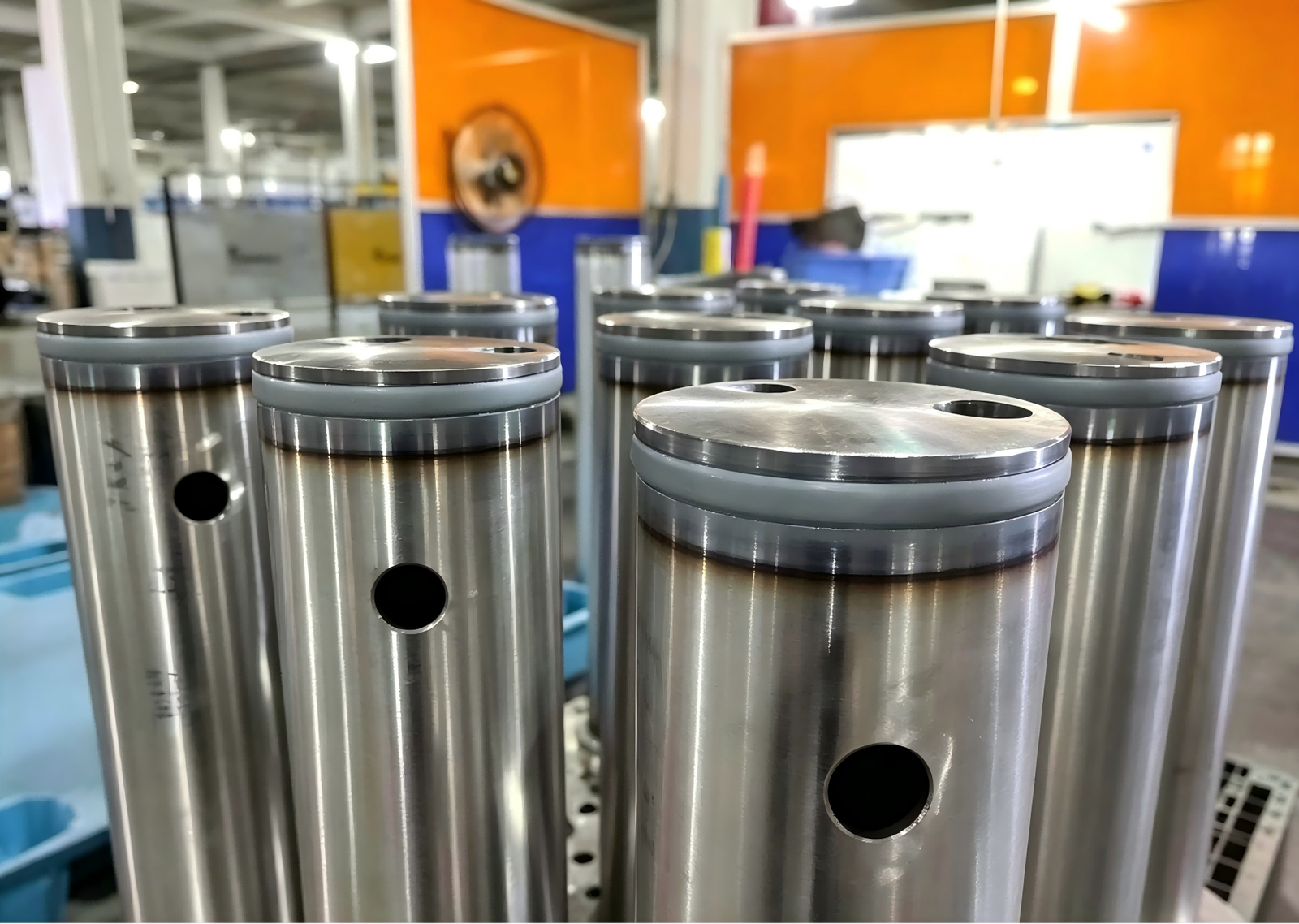
The result is a perfectly smooth weld on the inside of the tube. There are no cracks or pits that dirt to hide into. The ultimate goal of any mechanical seal support system is to maintain the fluid totally pure. The best way to achieve this is the automated welding at the construction stage.
Solving Records: Data on Every Weld
Modern automated welding systems are also data recorders. They will make a detailed digital log for every weld made. This log will contain the settings you used, the date, time, and operator ID.
This data can be printed or stored for quality control records. It can be linked to a specific weld on a system drawing. This ensures full records which are very important in regulated industries and for maintenance in future.
Solving Labor & Safety: Better Skills and Remote Operation
A trained operator can produce welds that meet the highest quality standards. This helps to solve the skilled welder shortage issue by utilizing the staff properly.
The process is also safer. The operator only need to upload and unload the products. Then, he/she can run the weld from a safe distance using a remote control. This greatly reduces risks to workers.
Using Automated Welding Solutions: A Practical Guide
Moving to an automated welding process may seem like a big step. However, with a clear plan, it can be a smooth and highly rewarding change. Following a few key steps that we have learned from our experience will ensure a successful launch.
Step 1: Identifying Your Needs
The first step is to identify your particular needs. How many welds do you perform?Your product size range? Examples of materials you use include stainless steel and alloys what quality standards such as are API 682 and B31.3? This information will help add definition to the correct solution.
Step 2: Selecting Not Only a Product but the Right Partner
Choosing a provider with wide experience in mechanical seal support system welding is a must. Only buying a machine is not sufficient. A true partner is the one who will carry you through the entire process.
A service provider with the whole package is what you should be looking for. They should help you select the right solution, develop weld programs for your materials and train your operators to achieve success.
Step 3: The Route to Return on Investment
Wrapping up, consider the return on investment (ROI). The automation of the process is a great way of reducing the costs related to weld failures and rework. It will also improve your production rates as you will be able to build in more systems. Most of all, it will prevent seal leaks, which can save you hundreds of thousands of dollars.
For companies considering this technology, the exploratory process of engaging specialized providers is crucial. Turnkey solutions from experts such as Mecanext can make the whole process seamless – from design to after-sales service,and professional technical training, ensuring the systems are built to the highest standards from day one.
Conclusion: The Future of Systems Strength Is Automated
The mechanical seal support systems are not easy to set up and monitor. But ensuring that the strength of these systems is not a source of risk for you does not have to be. Manual welding has so many variants; it is not suitable for such an important area.
Automated welding has the consistency, quality, and data that the modern industry demands. It has transcended from a “nice-to-have” luxury to a necessity mainstream. It is automated perfectly the future for a company that is serious about the safety and reliability of their rotating equipment and in mechanical seal support system welding.
FAQs for Mechanical Seal Support System Welding
1. Is API 682 obliged to use automated welding?
API 682 does not specifically dictate you must use automated welding. They, however, strongly discourage against threaded connections and insist on leak-free piping made of high-quality materials fit for the purposes intended.
2. What Materials Can Be Used for Automated Seal Support System Welding?
Automated orbital welding is the best choice for the materials found in most seal support systems. This includes 316/316L stainless steel, Duplex, Super Duplex, and other special alloys. The welding system comes with pre-made programs that ensure the best results for any type of material you select.
3. Is automated welding only for new construction?
No. Although it works perfectly on new projects, portable automatic welding systems are also often used for maintenance and repairs. They are much helpful in adding new lines to existing systems or replacing old, damaged sections, and providing excellent, reliable welds.
4. How big is the difference in cost between manual and automated welding?
In the beginning, the cost of automated equipment is more than manual tools. However, the total cost for each weld is often lower. This is due to quicker welding, zero defects or rework, and the lack of the need for rare, excessively paid welders. The long-term ROI is excellent, especially when you consider the high cost of a single leak or system failure.