

Braided metal hoses consist of multiple welded components, which makes welding process selection critical to sealing performance and service life.
In automated production, different TIG welding processes are applied depending on hose design, batch volume, and quality requirements
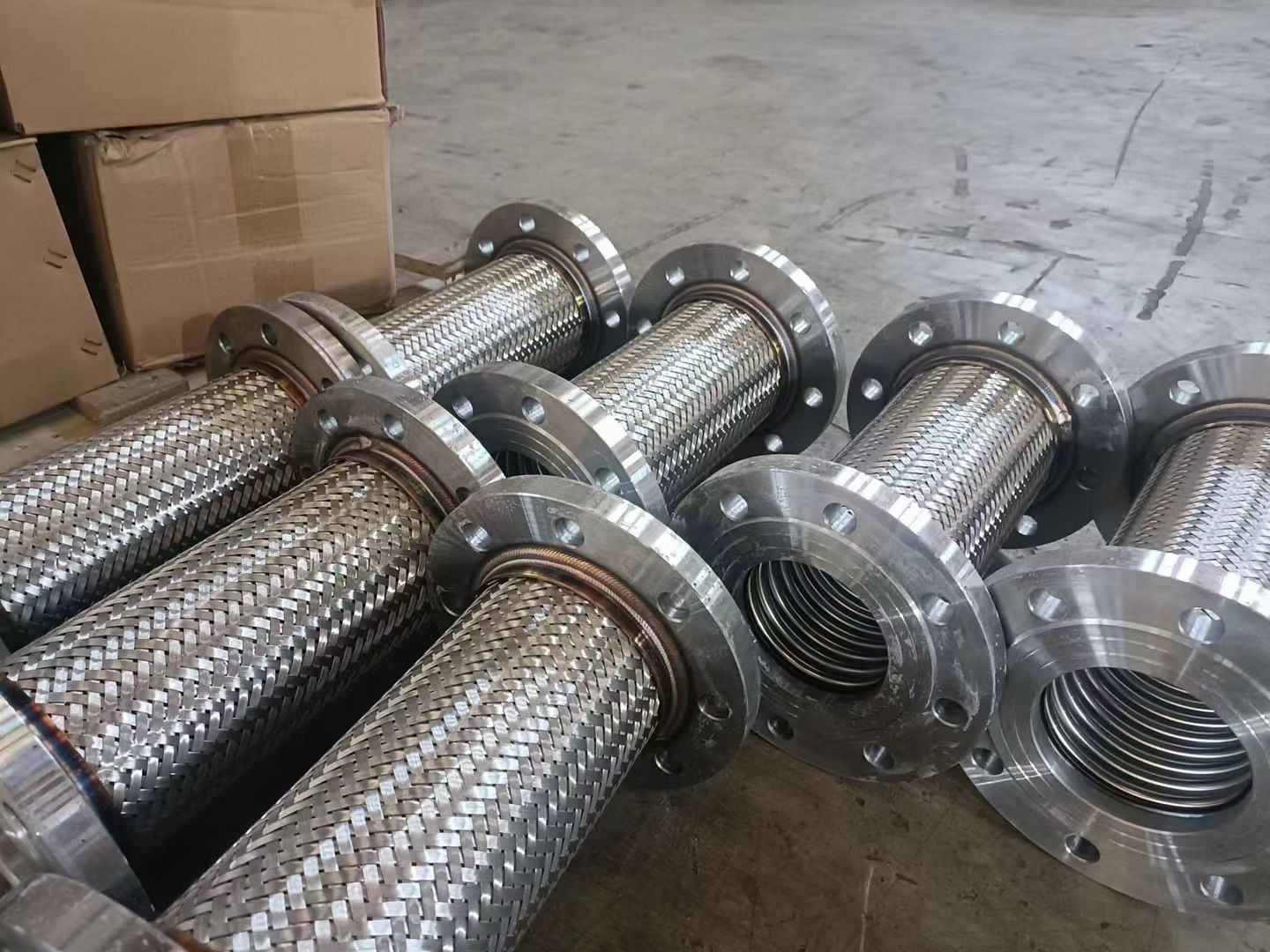
One-shot TIG welding for braided hoses, combining seal and end welding in a single operation. High efficiency for high-volume production. Size range: DN6–DN50.
Sequential TIG welding for seal first, then fitting attachment. Flexible for small to medium batch production. Customizable size range: DN6–DN300.
Two-stage TIG welding: first hose-to-fitting without braids, then braid and neck ring welding. Ensures precision and strong welds for complex hoses.
In the one-shot welding process, the hose, braid, ferrule/neck ring, and fitting are welded simultaneously in one continuous TIG welding cycle. This method minimizes handling steps, reduces cycle time, and ensures consistent weld quality across large production batches.
One-shot welding is not recommended for highly customized, low-volume hose assemblies.
This system follows the traditional two-step welding process, performing sealing welding first and then attachment welding. It is ideal for manufacturers handling multiple hose types, mixed batches, or customized specifications.
Traditional sealing & attachment welding may have longer cycle time compared to one-shot processes.
Key Advantages:
-Wide size range
-Quick changeover between hose types
-Stable weld quality for high-mix, low-volume production
Designed for demanding applications in food, medical, semiconductor, and military industries, two-stage TIG welding ensures superior precision and weld strength.
The process first welds the hose to the fitting without braids, then completes braid and neck ring welding for maximum reliability. Two-stage is typically used for critical applications.
Our engineers can evaluate your hose samples and recommend the most suitable automated welding process.
The table below compares common automated welding processes based on batch volume, appearance requirements, and industry applications, helping you quickly identify the most suitable solution.
Batch Volume | Appearance | Yield Rate | Applicable Industries | Welding Solution |
Multi-type, small batch | High | 100% | Vacuum, medical, food, fire protection, HVAC | Two-Stage Welding |
Medium | 100% | Industrial, civil (size mismatch between joint and hose) | Flexible wire-fed sealing+attachment welding | |
Medium-high batch | High | 100% | Vacuum, medical, food, fire protection, HVAC | Two-Stage Welding (internal & external) |
High | 96% | Fire protection, food, HVAC, industrial, refrigeration | One Shot Welding | |
Medium | 100% | Industrial, civil (size mismatch between joint and hose) | Wire-fed sealing+attachment welding |
Method | Weld Width | Speed | Appearance | Characteristics | Suitable Industries |
Laser fusion | ≤0.5 mm | Fast | Excellent | Lower fatigue resistance, highly sensitive to joint gaps | Semiconductor, vacuum, defense, medical, Liquid cooling |
TIG fusion | 1–1.5 mm | Moderate | Good | High fatigue resistance, tolerant to joint gap variation | Gas supply, civil use, medical, industrial |
Automated welding is not just about equipment selection —
welding feasibility and process stability must be validated before investment. Before investing in an automated welding system, we offer sample-based process validation to help you identify the most suitable welding solution.
By testing your hose samples, we help you:
Not sure which welding process fits your hose?
Send us your samples, and our engineers will evaluate and recommend the optimal solution.
One-shot welding welds the hose, braid, ferrule, and fitting in one continuous TIG welding operation, maximizing efficiency and consistency.
One-shot welding is optimized for speed and volume, completing the sealing and attachment welding in a single continuous operation. While traditional sealing and attachment welding offers the 2 steps sequentially and offers greater flexibility for customized hose designs, wider size ranges, and high-mix, low-volume production.
Yes. Depending on the process, automated systems can support hose sizes from DN6 up to DN300 or customized ranges.
Yes. Sample-based process validation is available before machine purchase.
We Are Committed to Delivering Quality Welding Solutions.
Empowering industries worldwide with precision, efficiency, and advanced welding technologies.
Jigao Innovation and Entrepreneurship Industrial Center, 803 Keyuan Road, High-Tech Zone, Jinan, Shandong Province