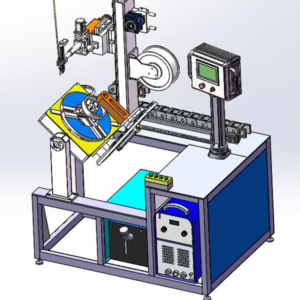
We understand both welding equipment and actual metal hose production processes, and provide proven SOPs plus validated welding parameters.

Customized TIG and laser welding systems for stable, repeatable corrugated hose production.
Welding corrugated metal hoses presents unique challenges due to thin walls, complex wave structures, and strict appearance requirements. As production volumes grow and quality standards become stricter, manufacturers need more stable and process-optimized welding methods.
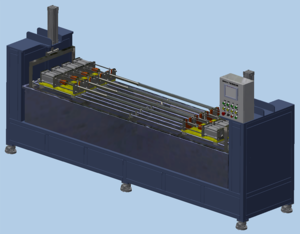
We provide customized automatic welding solutions for corrugated metal hoses based on hose diameter and production requirements. Rather than offering standalone machines, we focus on complete welding solutions that deliver stable quality, higher productivity, and repeatable results.
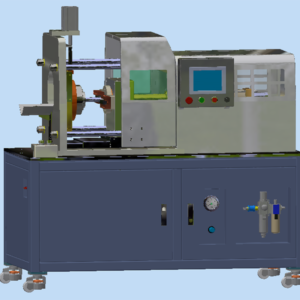
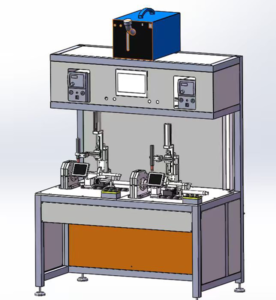
For standard corrugated hose joining without fittings. Ideal for joining two corrugated hose sections without braid.
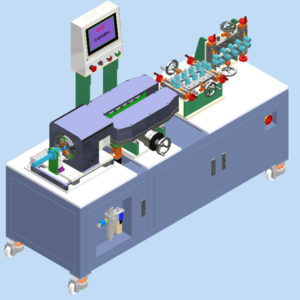
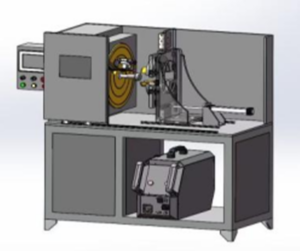
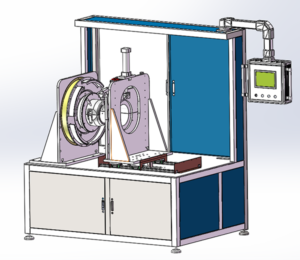
For consistent hose-to-fitting welding, especially for large or long hoses that require uniform circumferential welds.
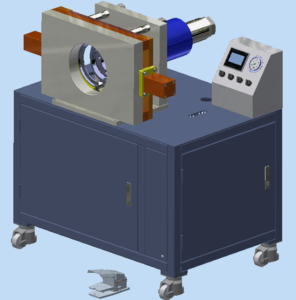
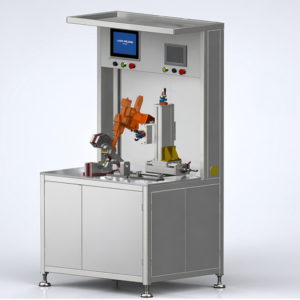
For thin-wall hoses and high-precision applications where weld appearance and accuracy are critical.
TIG butt welding is a widely used process for joining two corrugated hose sections without external braid. It can be configured with either a rotating welding torch or a rotating workpiece, depending on hose size and production requirements.
Orbital TIG welding is an automated process for circumferential welding of corrugated hoses to fittings. It typically uses a rotating welding torch, while a rotating workpiece with a fixed torch can also be applied to ensure uniform heat distribution and stable weld penetration.
Laser welding is a high-precision welding process designed for thin-walled corrugated hoses and hose-to-fitting applications. It uses a concentrated energy beam to achieve fast, clean, and controlled welding.
For corrugated hose assemblies used in heating, ventilation, and air-conditioning systems.
For flexible metal hose sections used in exhaust and vibration-isolation applications.
For precision hose assemblies used in modern cooling loop systems.
For hose products requiring reliable weld integrity and stable production repeatability.
With over 10 years of automatic welding experience, MecaNext focuses on process-oriented technical support, customized automation design, and on-site commissioning aligned with real production conditions.
We understand both welding equipment and actual metal hose production processes, and provide proven SOPs plus validated welding parameters.
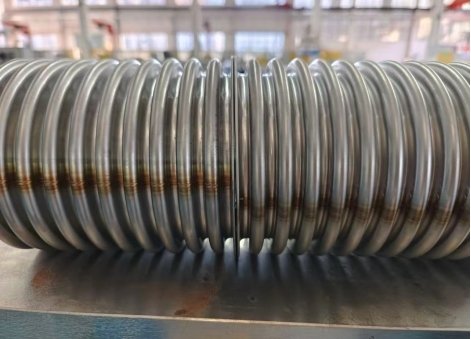
Each system is custom-designed based on hose size and production volume rather than offered as a one-size-fits-all standard machine.
We align equipment settings with real production conditions so you can achieve stable performance from day one.
Yes. With proper fixturing, process control, and parameter optimization, corrugated hoses can be welded automatically with stable and repeatable quality.
Laser welding is generally preferred for thin-wall hoses due to its low heat input and clean weld appearance. TIG welding may also be suitable depending on wall thickness and application.
Yes. Orbital TIG welding is an effective and cost-efficient solution for long or large-diameter corrugated hoses where manual welding is inconsistent.
Absolutely. All our welding solutions are customized based on hose diameter, wall thickness, material, and production requirements.
TIG welding offers stable heat control and strong welds with good tolerance to joint gap variations, while laser welding provides lower heat input, narrower seams, and much higher speed for thin-walled hoses with strict appearance requirements.
Still facing mismatch between hose ends and fittings? Share your hose size, end structure, and production requirements, and we can help evaluate the right half-wave trimming solution.
We Are Committed to Delivering Quality Welding Solutions.
Empowering industries worldwide with precision, efficiency, and advanced welding technologies.
Jigao Innovation and Entrepreneurship Industrial Center, 803 Keyuan Road, High-Tech Zone, Jinan, Shandong Province