
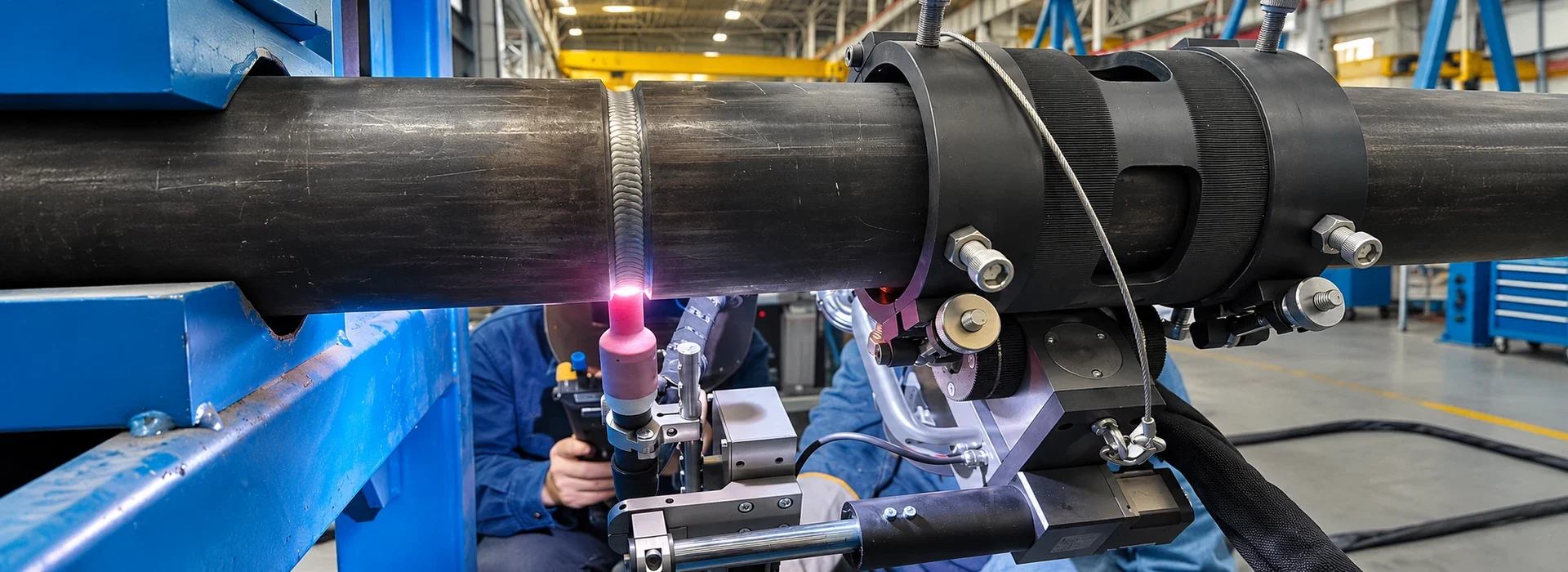
Rotary welding vs orbital welding is an important comparison for manufacturers choosing an automated TIG welding system. Both processes are used for circumferential welding, but they differ in how the workpiece and welding torch move.
In rotary welding, the workpiece rotates while the torch remains stationary or follows a controlled path. In orbital welding, the welding head travels around a stationary pipe or tube. The right choice depends on workpiece size, joint geometry, production volume, and welding requirements.
What Is Rotary Welding?
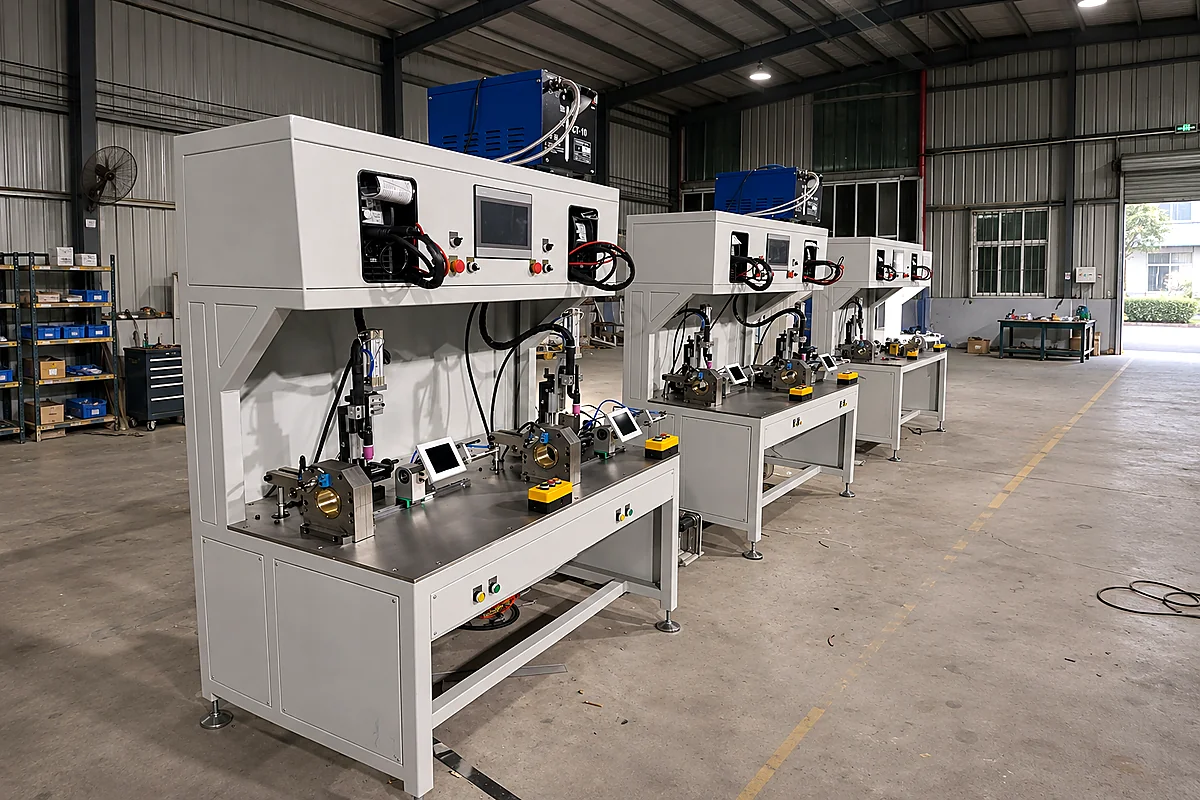
Rotary welding is an automated welding method in which the workpiece rotates around its central axis while the welding torch remains in a fixed or controlled position.
The component is secured by a chuck, rotary fixture or dedicated clamping system. A rotary mechanism drives the workpiece through the weld while the torch maintains a stable position.
For pipe and flange assemblies, the choice of welding equipment depends on joint geometry, workpiece dimensions, and production requirements. Learn more about our pipe-to-flange welding applications.
Typical rotary welding applications
- Metal hose-to-fitting welding
- Stainless steel bellows-to-end fitting welding
- Pipe-to-fitting circumferential welding
- Small and medium-sized pressure vessels
- Expansion joint welding
Note: Rotary TIG welding should not be confused with rotary friction welding. They are different welding processes with distinct operating principles and applications.
What Is Orbital Welding?
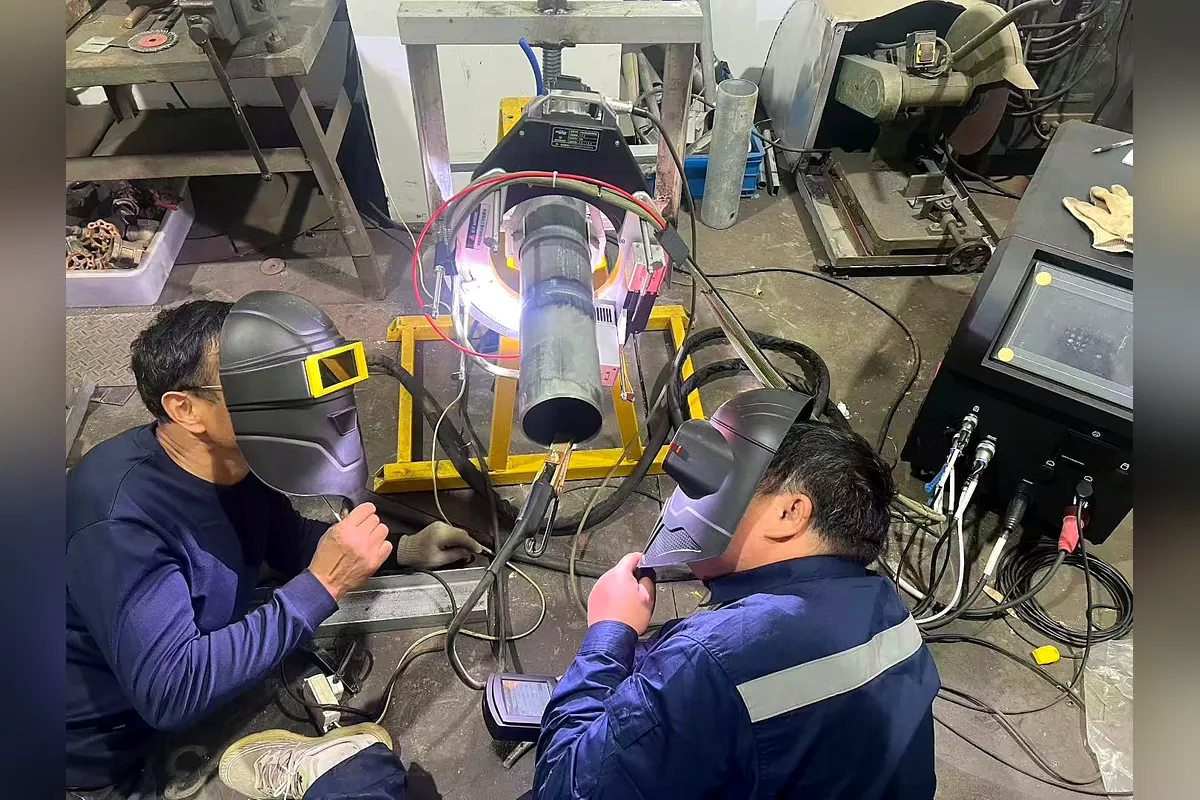
AOK orbital TIG welding operation on a steel pipe
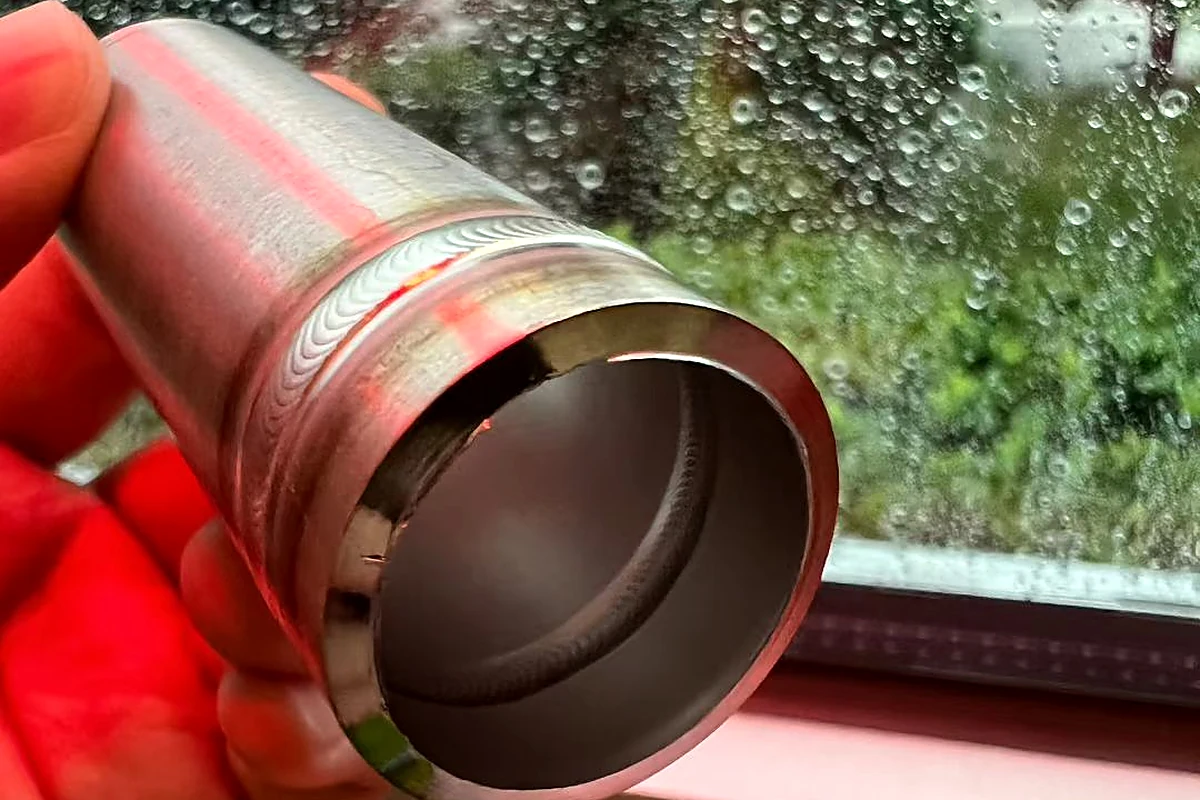
Circumferential TIG weld on a stainless steel tube
Orbital welding keeps the workpiece stationary while the welding torch or head travels around it, typically completing a 360-degree welding path.
Orbital TIG welding is suitable for pipe and tube joints where the workpiece remains stationary. Applications range from small-diameter stainless steel tubing to large pipe assemblies and installed piping, provided the welding head has sufficient access to the joint.
Welding current, travel speed and other process parameters can be controlled through a programmed system. For a broader technical explanation of this process, refer to TWI’s guide to orbital welding.
Typical orbital welding applications
- Pipe-to-pipe and pipe-to-fitting welding
- Stainless steel pipe fabrication
- Pipe spool and skid-mounted piping systems
- Large or fixed pipes
- On-site pipeline welding
Rotary Welding vs Orbital Welding Comparison
| Comparison factor | Rotary welding | Orbital welding |
|---|---|---|
| Workpiece movement | Workpiece rotates | Workpiece remains stationary |
| Torch movement | Torch remains relatively fixed | Welding head travels around the workpiece |
| Main mechanism | Rotary chuck, fixture or positioner | Orbital welding head (open or enclosed, depending on the application) |
| Typical applications | Metal hoses, bellows, fittings and vessels | Pipes, pipe spools and installed pipelines |
| Main advantage | Efficient repetitive welding of rotatable parts | Suitable for fixed or difficult-to-rotate workpieces |
When evaluating rotary welding vs orbital welding, the key decision is whether the workpiece can be rotated safely and consistently. Rotary welding is often suitable for repeatable component production, while orbital welding is generally preferred for fixed piping or assemblies that are difficult to rotate.
There is no universally better method. The right choice depends on the workpiece, joint design, production volume, accessibility and whether the component can be rotated safely.
Which Welding Method Is Right for Your Application?
Rotary welding may be suitable when:
- The workpiece can be securely clamped and rotated
- You produce a high volume of similar components
- Your products include metal hoses, bellows or end fittings
- Repeatable positioning and cycle time are important
Orbital welding may be suitable when:
- The workpiece is too large or heavy to rotate
- The pipe must remain fixed during welding
- You produce pipe spools or piping assemblies
- The work involves installed or restricted-access pipelines
MecaNext Automatic Welding Solutions
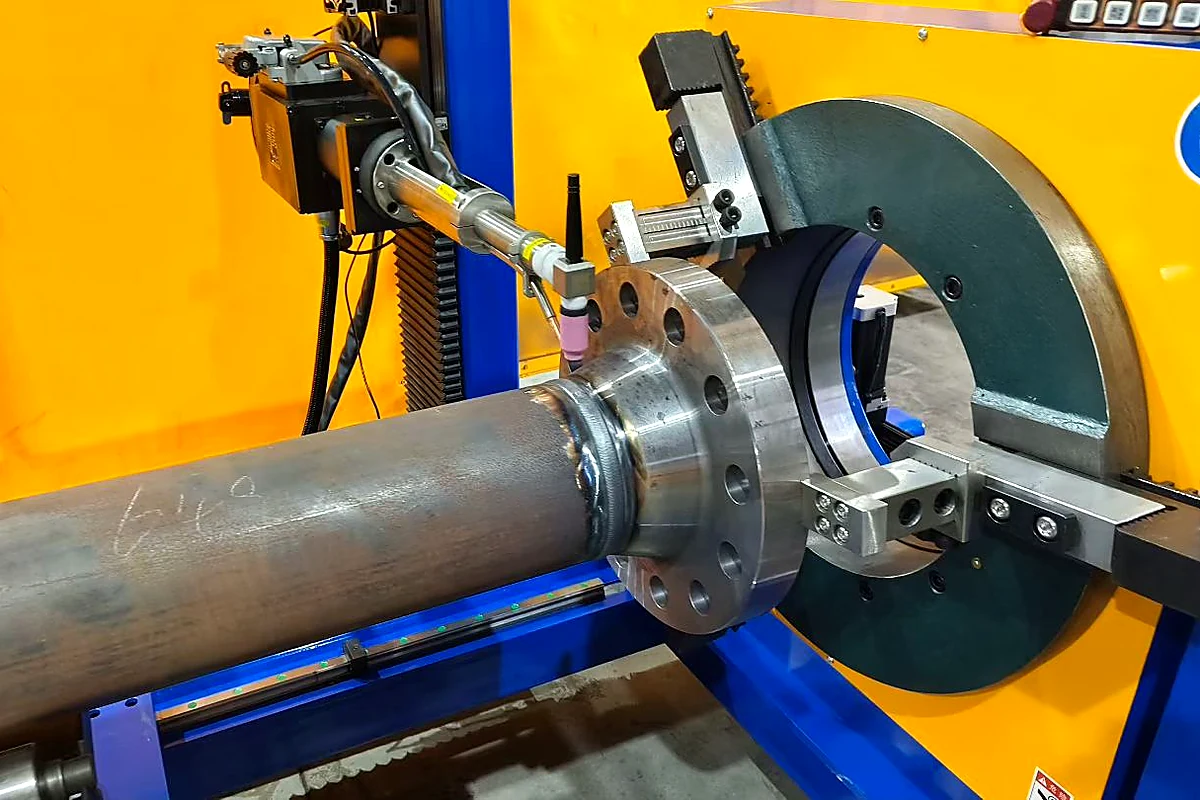
Rotary Welding System
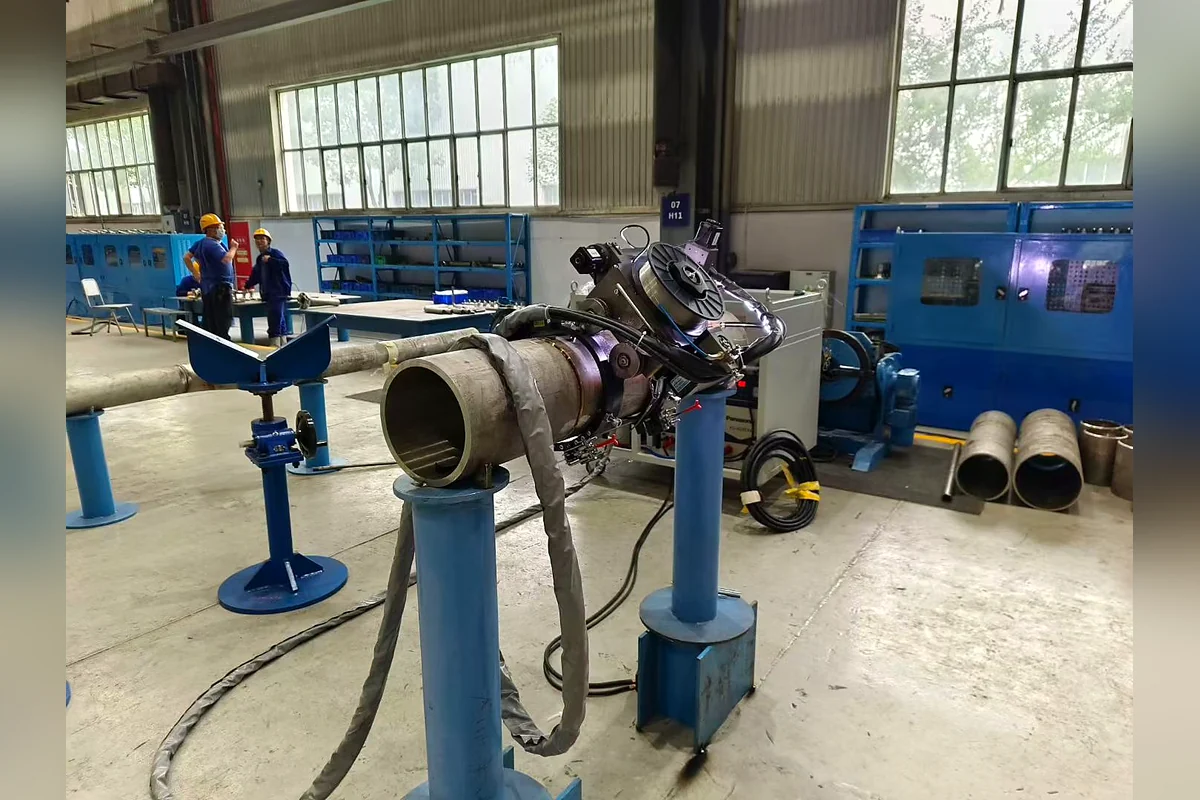
Orbital Welding System
MecaNext provides automated welding equipment for metal hoses, stainless steel bellows, expansion joints, piping systems and pressure vessels.
HF50J Automatic Welding Machine
A rotating-workpiece solution for metal hoses, bellows, fittings and related components. The machine can be customized according to product diameter, fitting geometry and welding requirements.
AOK Orbital Welding System
An automated orbital welding solution for pipe fabrication and on-site applications, particularly suitable for large or fixed workpieces that are difficult to rotate.
How to Select the Right Automatic Welding System
Before choosing equipment, evaluate material type, diameter, wall thickness, joint configuration, product length, workpiece weight, production volume, welding speed, quality requirements and available installation space.
If you are unsure which configuration is suitable, MecaNext can review your application and recommend a practical solution based on your actual products. Manufacturers can also compare industrial welding robots and dedicated welding systems to determine which automation approach is better suited to their production needs.
Practical Considerations for Equipment Selection
When comparing rotary welding vs orbital welding, manufacturers should consider more than welding speed or equipment configuration. The most suitable system depends on the actual workpiece and production process.
Workpiece Size and Weight: Smaller components can often be rotated using dedicated fixtures, while large or heavy assemblies may require a stationary workpiece.
Joint Accessibility: The welding torch must have sufficient access to the joint throughout the welding cycle. Complex fittings and restricted spaces may require a different welding head configuration.
Production Volume: High-volume production may benefit from dedicated rotary welding stations with automated clamping and repeatable positioning.
Weld Quality Requirements: Material thickness, joint preparation, shielding gas control, and process consistency should all be evaluated.
Automation and Integration: Manufacturers should also consider loading methods, fixture changeover, operator requirements, and integration with existing production lines.
For critical applications, sample welding trials can help verify equipment suitability before final selection.
Example: Pipe-to-Flange Welding and On-Site Piping
For repeated pipe-to-flange joints on manageable components, a rotary TIG welding system may support consistent positioning and fixture-based production.
For installed piping or larger assemblies that cannot be rotated, an orbital welding system may be more practical, provided the welding head has sufficient clearance.
In both cases, sample welds should be evaluated for penetration, bead consistency, distortion, and joint accessibility before selecting equipment. The final configuration should also consider material grade, wall thickness, joint preparation, and applicable inspection requirements.
Frequently Asked Questions
What is the main difference between rotary and orbital welding?
Rotary welding rotates the workpiece while orbital welding keeps the workpiece stationary and moves the welding head around it.
Is rotary welding suitable for metal hoses?
Yes. Rotary welding is commonly used for metal hose-to-fitting, bellows and repetitive circumferential welding.
Is orbital welding suitable for large pipes?
Yes. Orbital welding is suitable for large, heavy or fixed pipes that are difficult to rotate.
Can MecaNext customize a welding machine?
Yes. Equipment can be customized according to workpiece dimensions, joint configuration, production volume and welding requirements.