
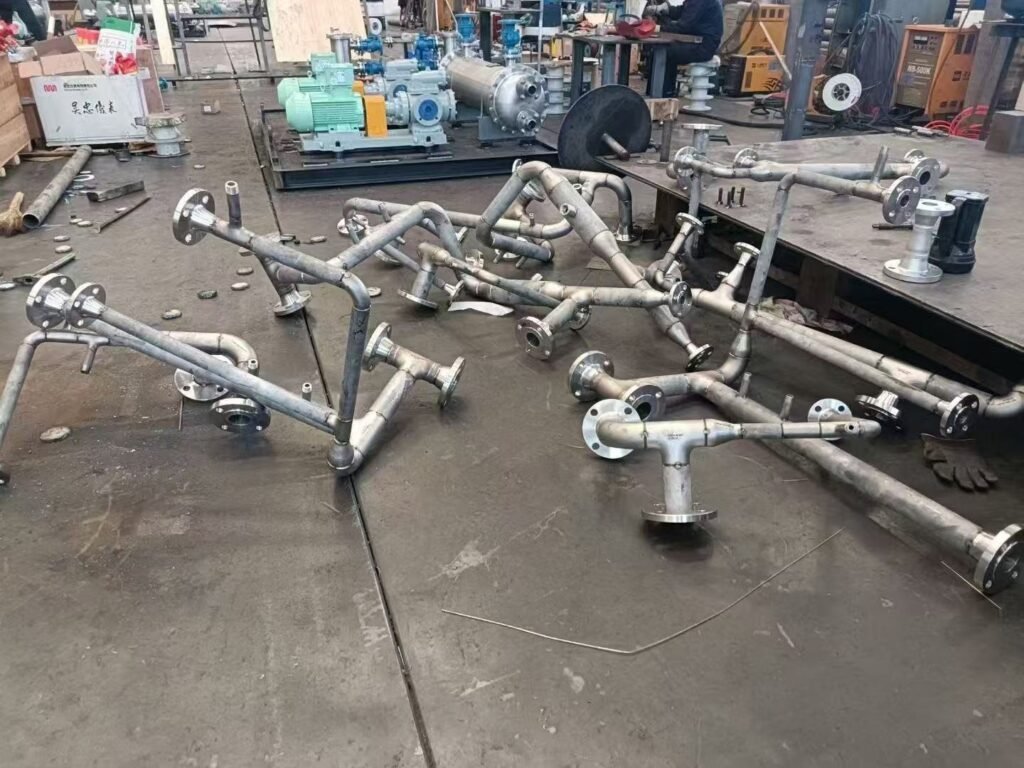
An Automatic Pipe Welding Machine can help pressure piping manufacturers improve welding consistency, reduce repetitive manual work, and increase production efficiency. As welding automation becomes more widely adopted, skid fabricators, shipyards, pressure vessel manufacturers, and pipe spool fabrication companies are increasingly evaluating different automatic welding systems.
However, many users are still unclear about several important questions:
- How should different types of automatic welding machines be selected for different applications?
- How can you evaluate the real differences between automatic welding systems from different manufacturers?
- How can automatic welding equipment be used effectively after it is introduced into production?
In this article, we will examine these questions from both the user’s and the equipment manufacturer’s perspectives.
1. How to Choose the Right Automatic Welding Equipment for Your Application
1.1 Automatic Welding Center for Pipe Spool Prefabrication: Prioritize 1G Welding
For pressure piping manufacturers, especially skid-mounted equipment manufacturers, approximately 60–80% of the piping welding workload can often be completed during the prefabrication stage.
The higher the proportion of piping that can be prefabricated in the workshop, the less fitting and welding work needs to be carried out directly on the skid.
To some extent, the percentage of prefabrication also reflects the production planning and operational capability of a skid manufacturer.
Therefore, for manufacturers of pressure piping assemblies that want to introduce welding automation, the first priority should normally be an Automatic Pipe Welding Machine that can meet the requirements of pipe spool prefabrication.
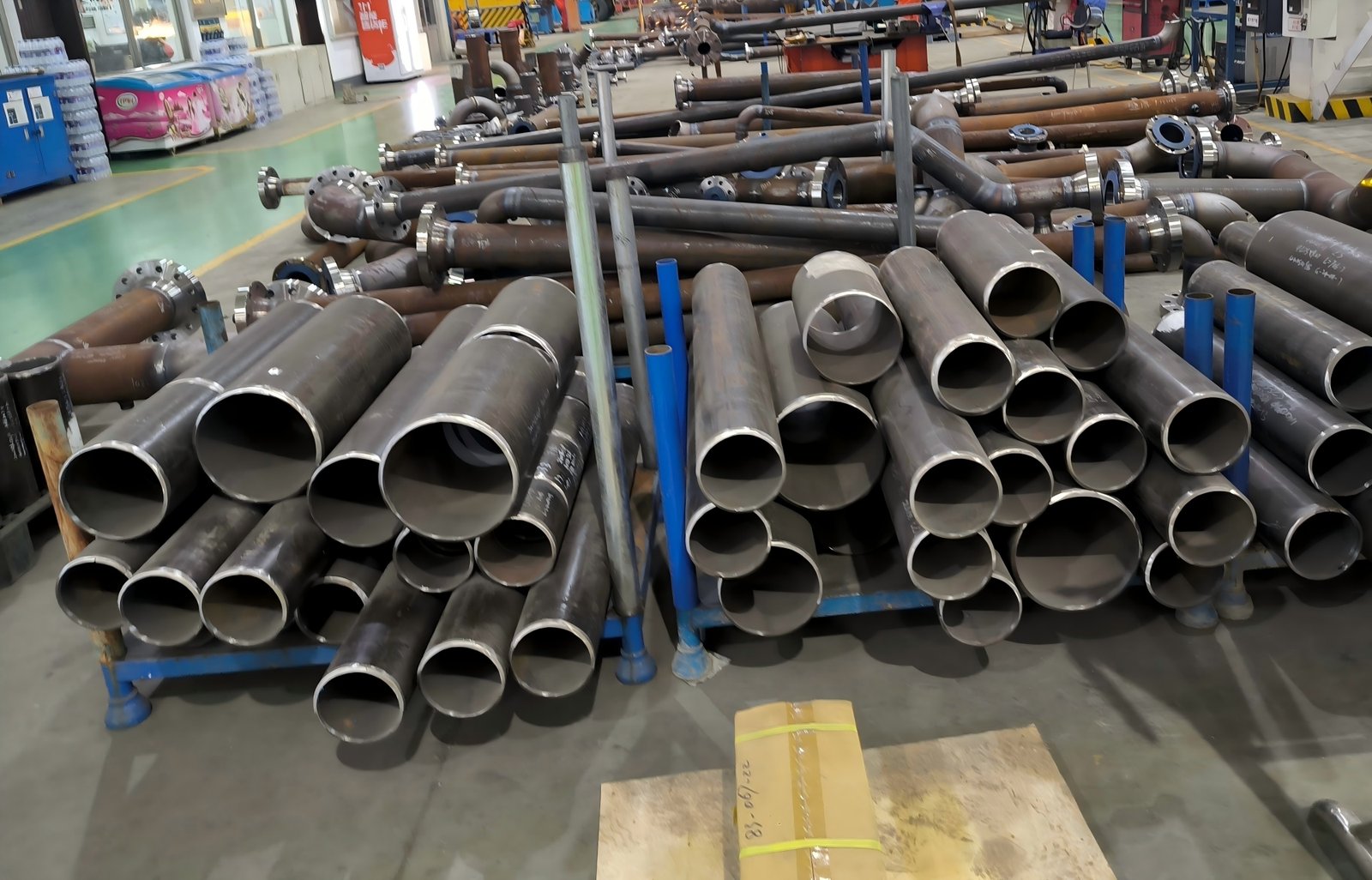
The equipment should be capable of handling different joint types, including:
- Pipe-to-pipe butt welds
- Pipe-to-flange welds
- Elbows
- Tees
- Internal fillet welds
- External fillet welds
- Various other pipe and fitting combinations
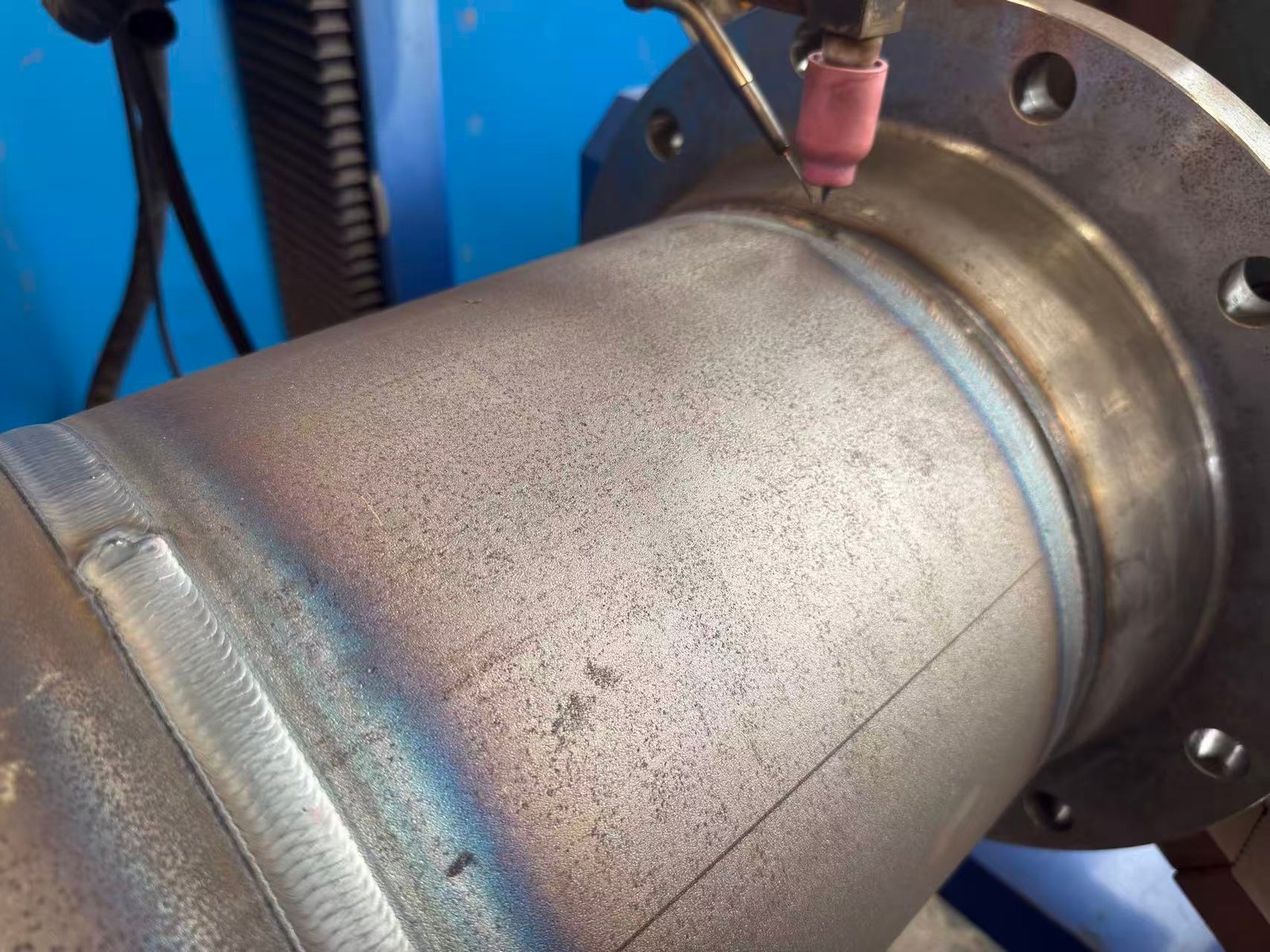
At the same time, the machine should be flexible enough to accommodate high-mix, low-volume production involving different pipe diameters, fittings, and joint configurations.
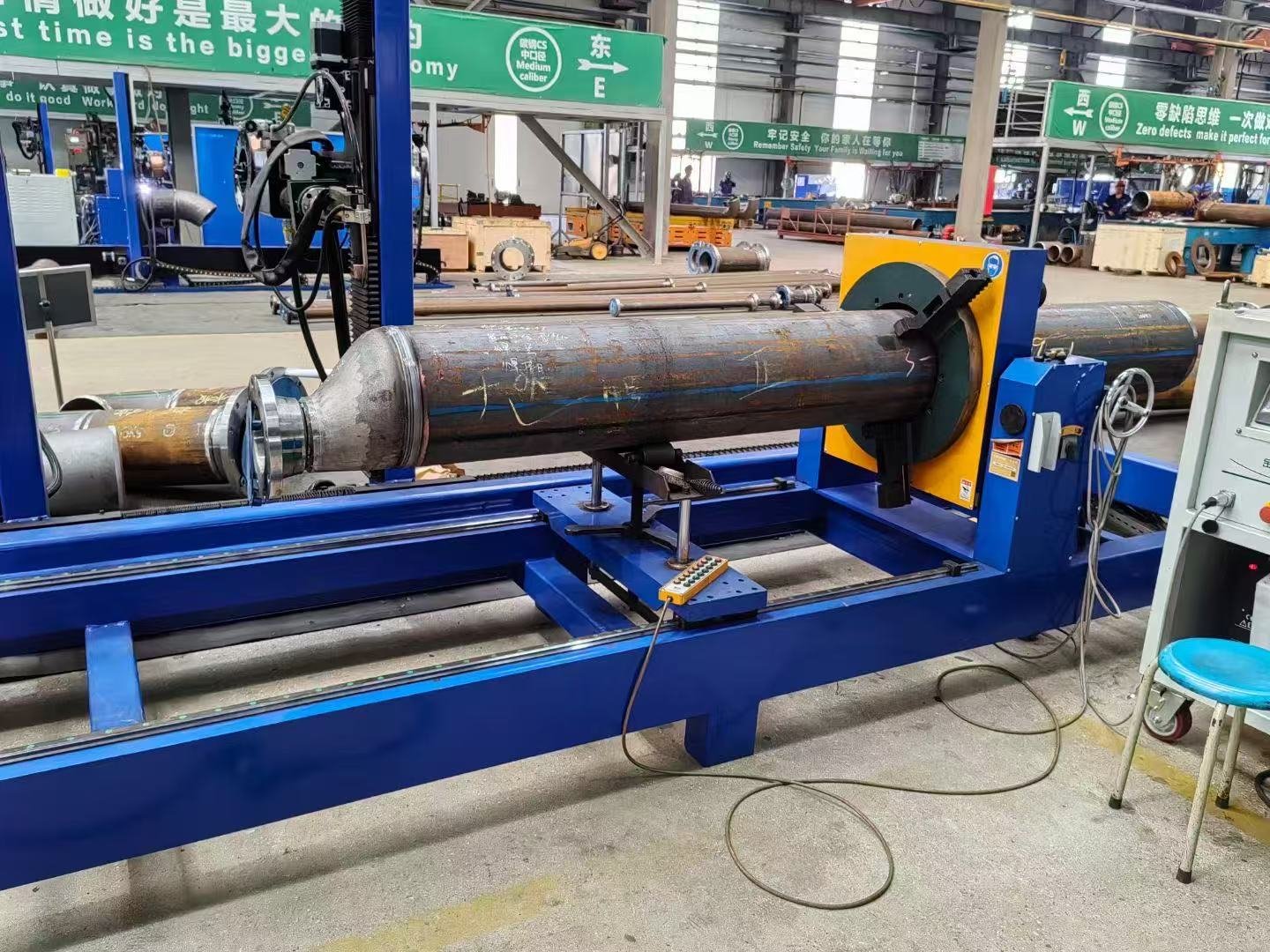
For pipe spool prefabrication, I generally recommend a horizontal pipe welding center. This type of Automatic Welding Center is especially suitable for workshop pipe spool prefabrication.
In this configuration, the pipe or workpiece rotates while the welding torch remains relatively stationary. The weld is therefore maintained in the 1G position throughout the welding process.
This configuration is particularly suitable for workshop pipe fabrication because it is easy to operate, efficient, and provides relatively stable welding conditions.
Keeping the weld pool continuously in the 1G position also makes process control easier and provides better consistency than welding in changing positions.
1.2 Orbital Welding for Field Installation and Skid Fit-Up
A horizontal pipe welding center begins to show its limitations during field installation or final skid assembly.
After the first or second stage of pipe spool assembly, the complete piping assembly can become too large or geometrically complex to rotate.
At this point, an Orbital Welding system becomes a more practical Automatic Pipe Welding Machine solution.
Instead of rotating the workpiece, the welding torch rotates around the stationary pipe.
This type of equipment is mainly used for:
- On-site piping installation
- Skid-mounted piping
- Restricted-access locations
- Pipe joints where the workpiece cannot be rotated
- Pipe-to-pipe butt welds
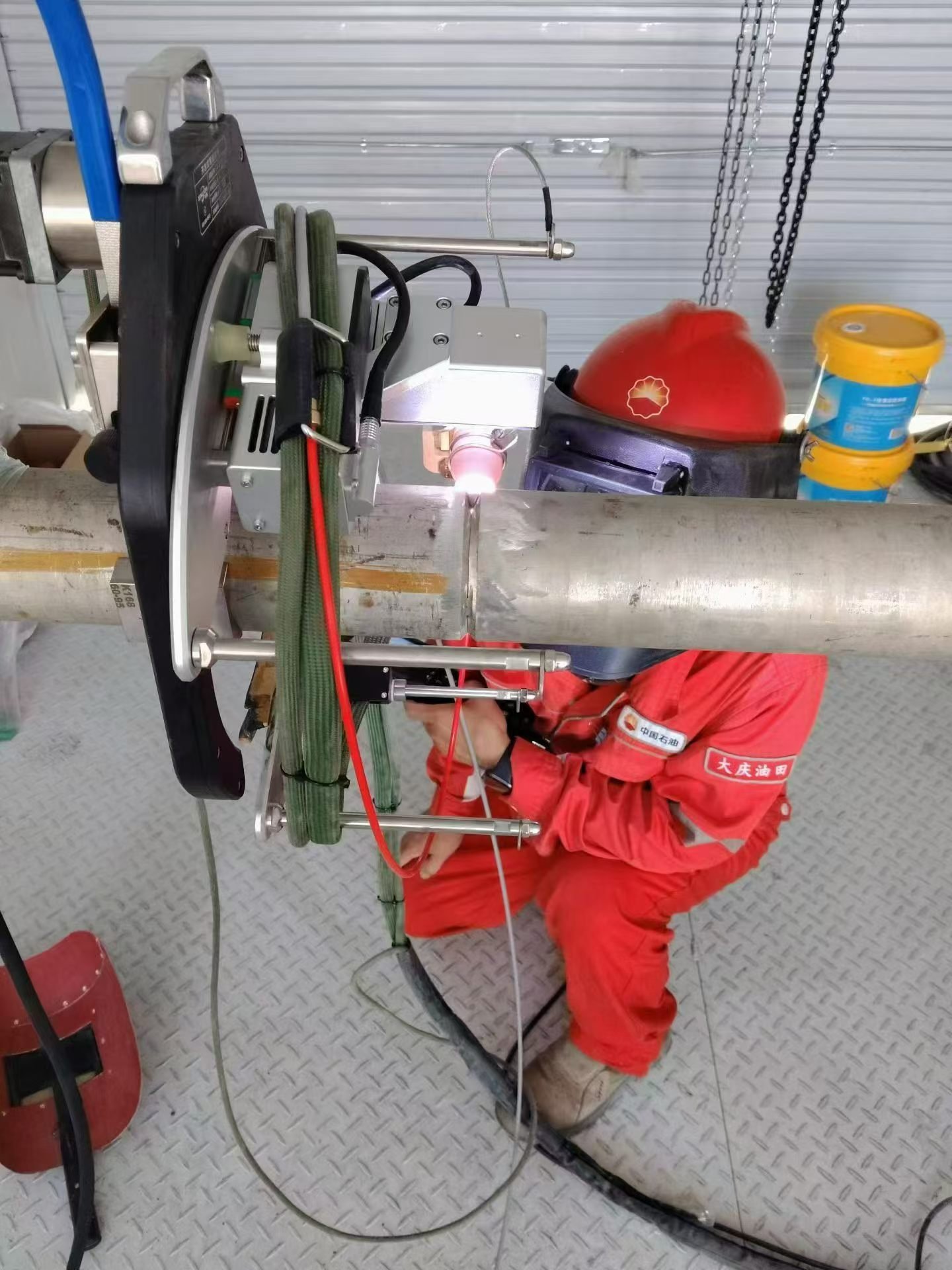
However, this configuration usually involves welding in the 5G position.
During 5G welding, the position of the molten weld pool changes continuously as the torch moves around the circumference of the pipe. Gravity therefore affects the weld pool differently at the top, sides, and bottom of the pipe.
As a result, compared with 1G welding, 5G orbital welding generally has lower process stability and welding efficiency and places greater demands on process parameter optimization and operator skill.
Therefore, orbital welding should not automatically be considered the best solution for every pipe welding application.
Whenever the workpiece can be rotated conveniently, 1G welding is generally the preferred solution because of its greater process stability.
1.3 Vertical Rotary Torch Welding for Small-Diameter Pipe Assemblies
For certain small-diameter or irregular pipe assemblies, the workpiece cannot easily be rotated in a horizontal welding center.
At the same time, an orbital welding head may not have enough straight pipe length or suitable space to position and clamp the workpiece correctly.
This is particularly common with:
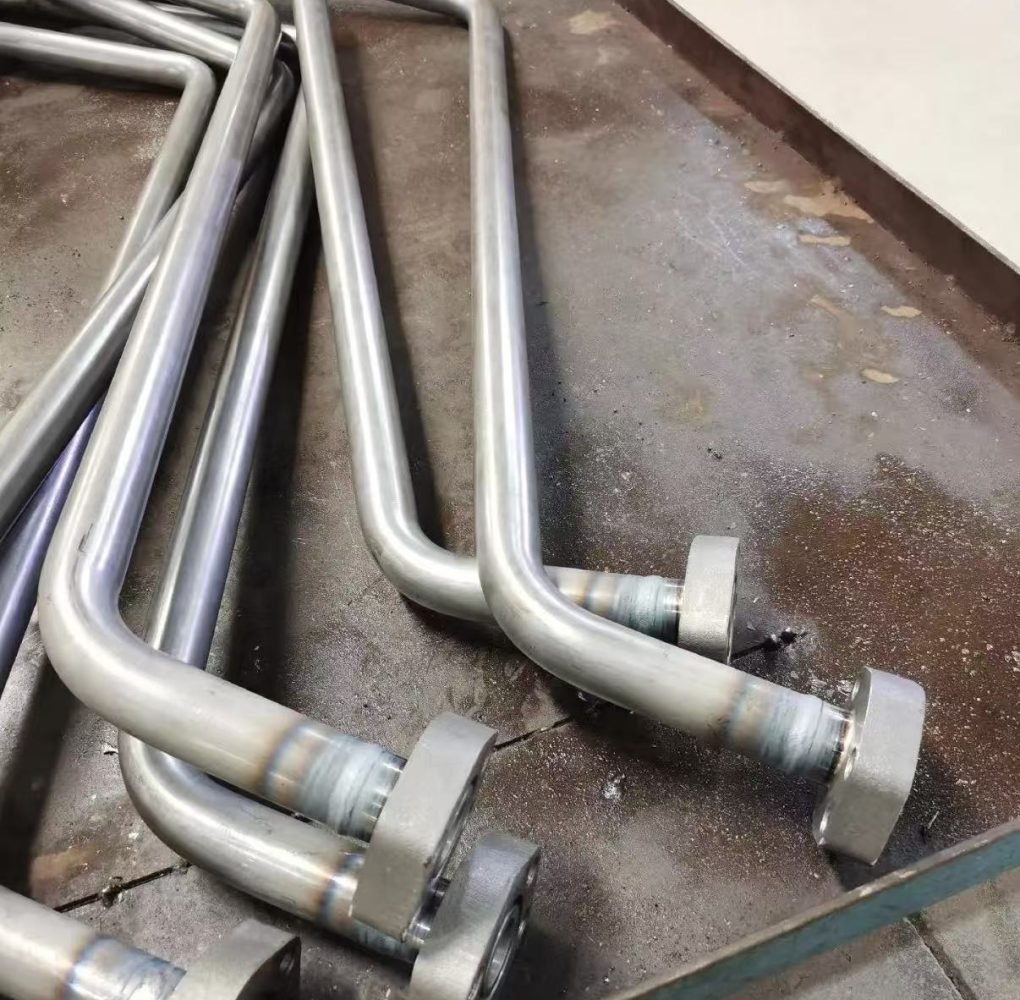
- Hydraulic piping
- Lubrication piping
- High-pressure oil pipes
- Bent tube assemblies
- Small-diameter pipe fittings
- Components where the weld is located near the end of the tube
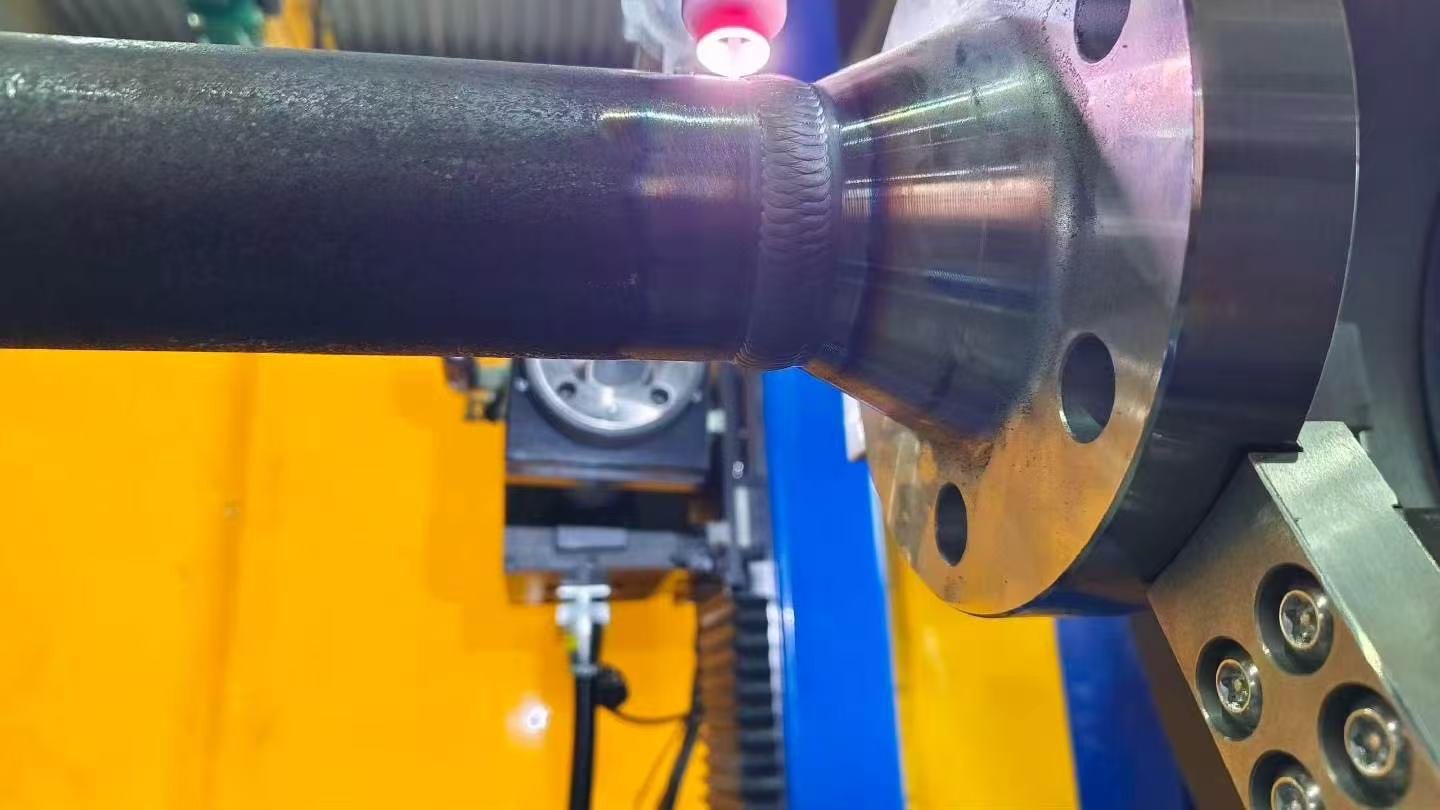
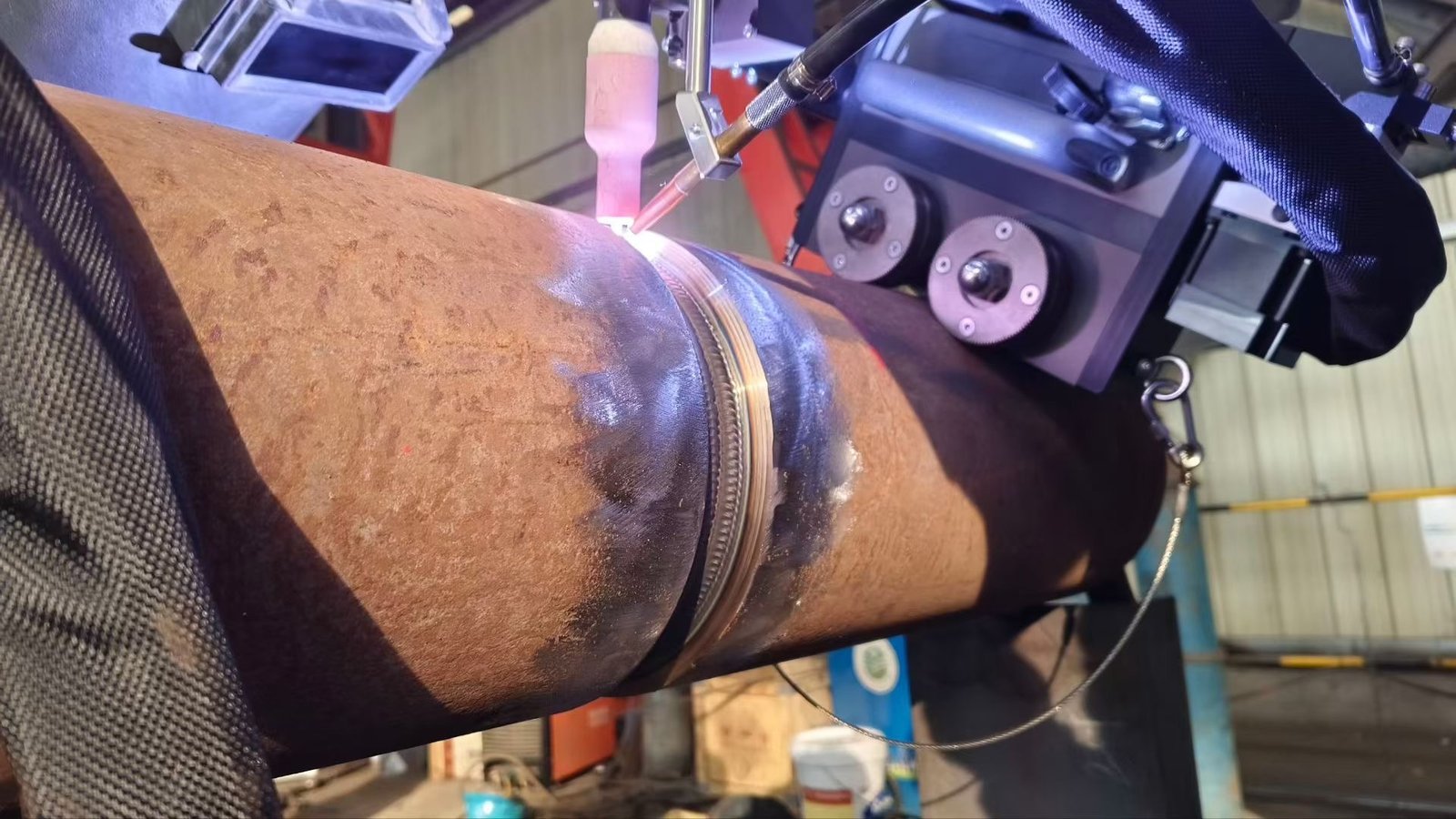
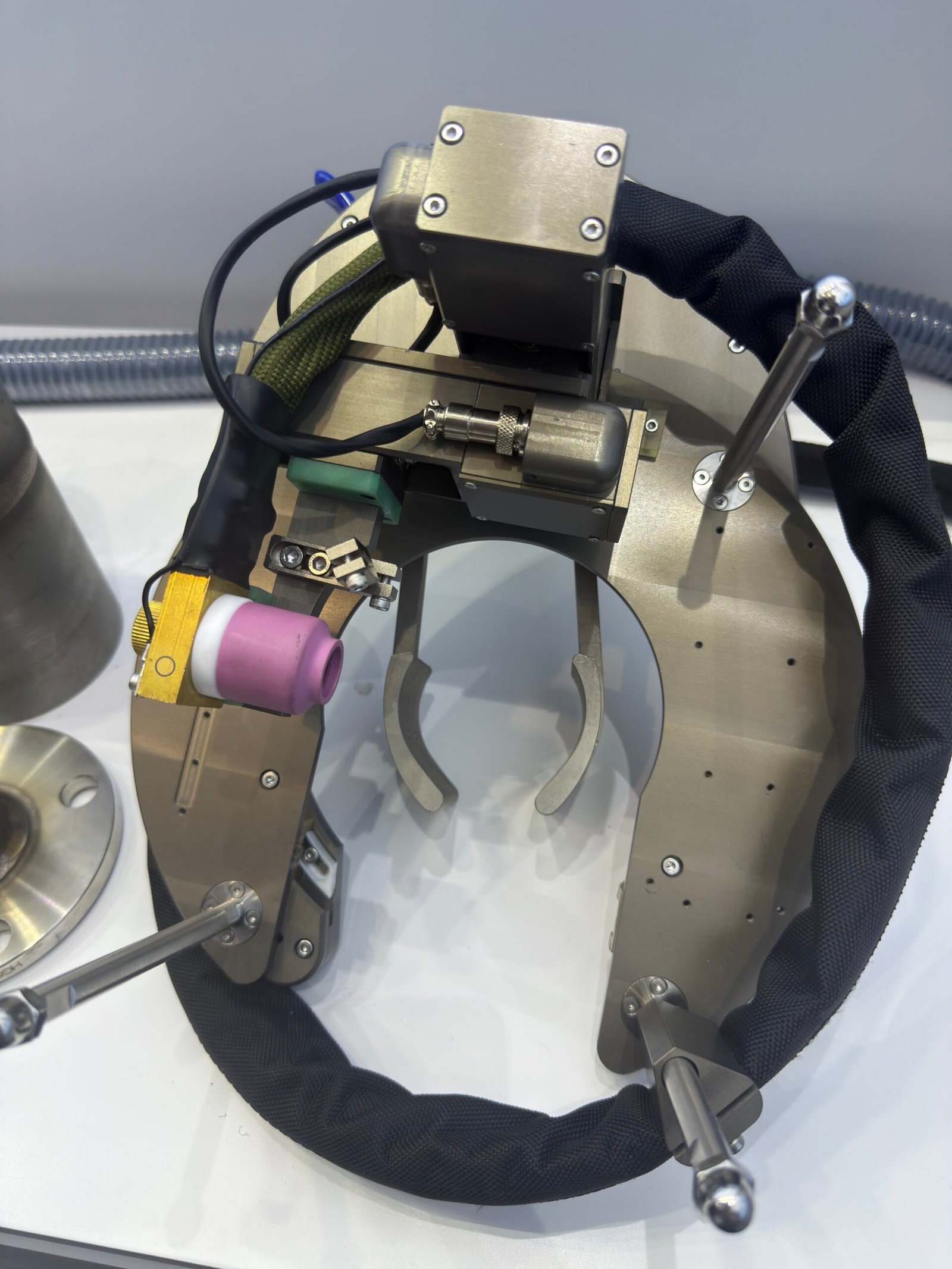
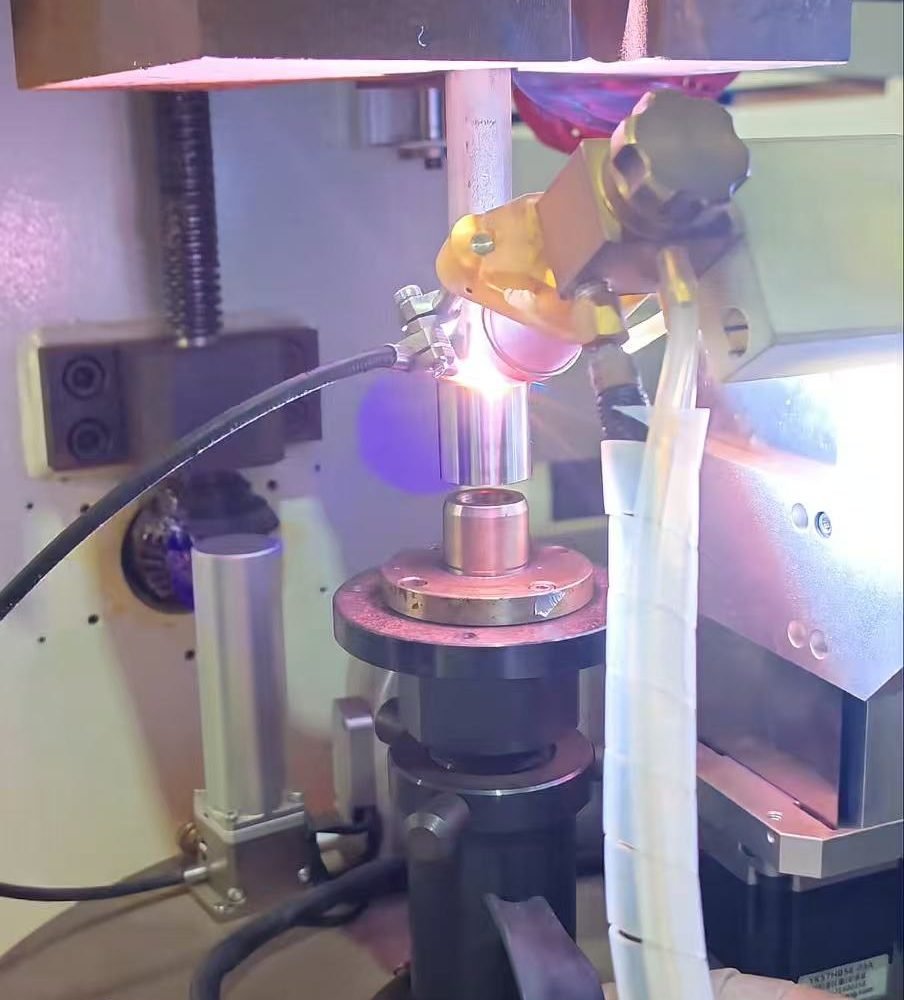
For these applications, Vertical Rotary Torch Welding can be a more suitable Automatic Pipe Welding Machine solution.
With this configuration, the workpiece remains stationary while the welding torch rotates around the joint.
The welding is generally performed in the 2G position.
This structure is particularly suitable for fittings located at the end of a pipe, short pipe butt joints, and fillet welds.
For small and irregular components, loading, positioning, clamping, and welding can all be relatively convenient.
1.4 Are Welding Robots Necessary for Conventional Pressure Pipe Circumferential Welding?
For conventional pressure piping projects where the main requirement is circumferential welding, I generally do not recommend using an industrial robot unless there are other complex welding requirements.
Industrial welding robots provide excellent flexibility, but for standard circumferential pipe welding they normally involve:
- Higher investment cost
- More complicated programming
- More complicated fixture design
- Longer setup time
- Higher integration requirements
For repetitive circumferential pipe welds, a purpose-built automatic welding machine is usually simpler to operate and more cost-effective.
2. How to Evaluate an Automatic Pipe Welding Machine from Different Manufacturers
When evaluating an Automatic Pipe Welding Machine, buyers should look beyond the external appearance of the equipment. An automatic welding system can be broadly divided into two major parts:
hardware and software.
When buyers are not familiar with automatic welding equipment, they often focus primarily on the external appearance and mechanical structure of the machine.
However, two machines that look almost identical may differ significantly in manufacturing cost, mechanical accuracy, control capability, service life, and actual production performance.
2.1 Hardware: Similar Appearance Does Not Mean Similar Quality
Many automatic welding machines may look similar or even almost identical from the outside.
However, there can be considerable differences in:
- Structural materials
- Machining accuracy
- Surface treatment
- Mechanical rigidity
- Number of movable axes
- Drive systems
- Adjustment methods
For example, buyers should consider questions such as:
- Are the mounting surfaces for the linear guides CNC machined?
- Is the welded machine frame stress-relieved before final machining?
- What materials are used for critical mechanical components?
- How many adjustable or movable axes does the machine have?
- Which axes are manually adjusted?
- Which axes are motorized or servo-controlled?
- Can the positions of these axes be stored and recalled?
- Is the machine surface painted or powder-coated?
These details may not be obvious to someone who is unfamiliar with machine design, but they are directly related to the manufacturing cost of the equipment.
More importantly, they affect:
- Long-term mechanical accuracy
- Repeatability
- Equipment service life
- Stability
- Maintenance requirements
- Ease of operation
Therefore, the quality of an automatic welding machine should never be judged only by its external appearance.
2.2 Software and Control System
For special-purpose equipment, the control software is often even more important and accounts for a considerable part of the overall value of the machine.
An automatic welding machine should provide adjustable parameters including welding speed, welding angle, wire feeding speed, welding current, oscillation width, left and right dwell time, peak/background current, peak/background wire feeding speed, preheating parameters, crater-fill parameters, and other related settings.
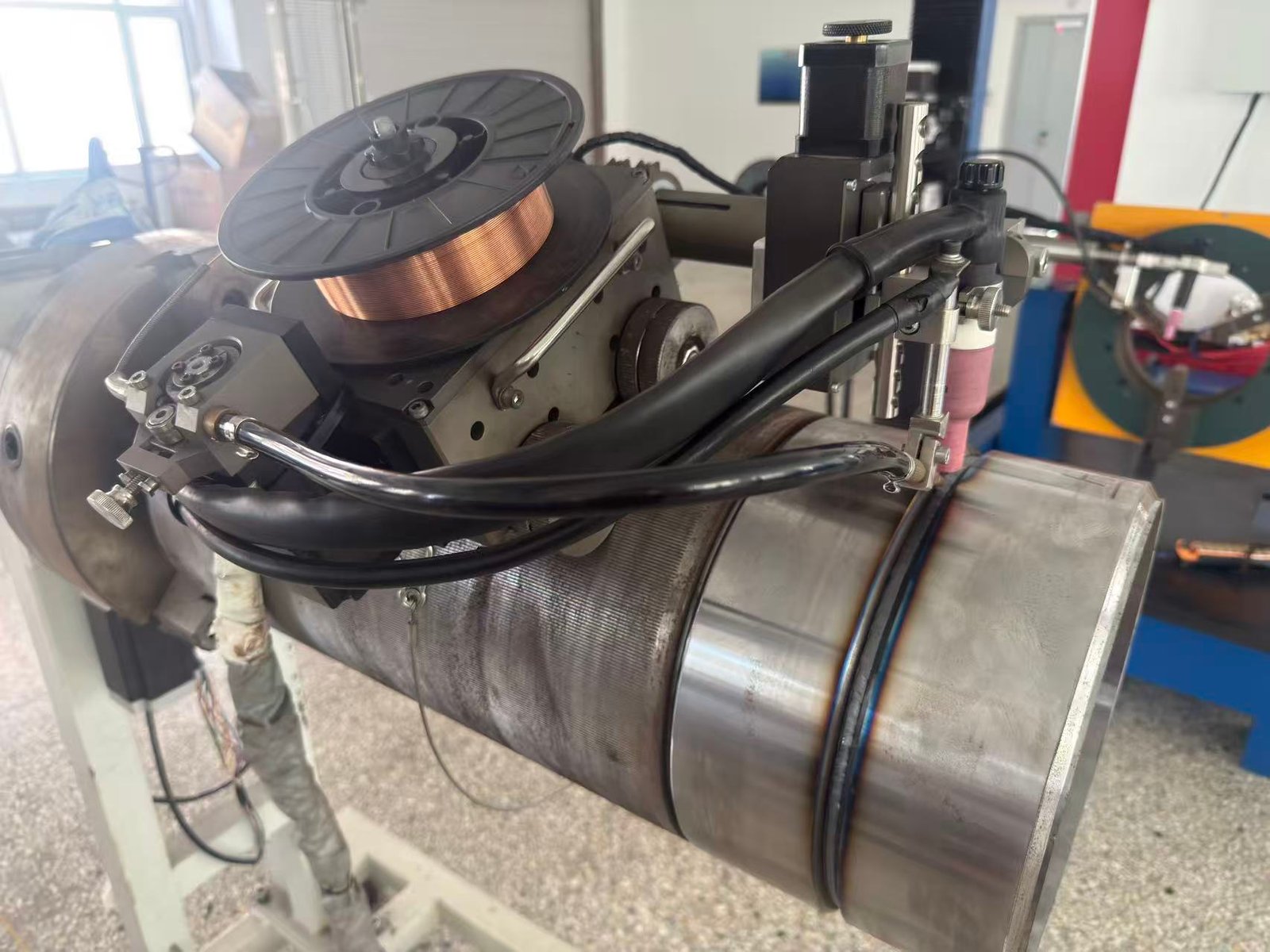
All of these adjustable parameters should be integrated into the operating interface so that welding programs can be saved and quickly recalled.
Some basic automatic welding machines do not integrate the machine control system with the welding power source. In such cases, when welding parameters need to be changed, the operator must also make separate adjustments directly on the welding power source. This can cause considerable inconvenience in actual production.
In addition to these basic parameters, there are also important system-level functions such as Arc Voltage Control (AVC) and automatic multi-layer welding.
Although many manufacturers claim to offer these functions, the actual user experience and performance can vary significantly.
Some manufacturers use externally purchased control modules, while others develop their own control programs. The tuning and adaptation of these programs can also differ greatly from one manufacturer to another.
Take the AVC function in TIG welding as an example. The tracking speed of the AVC system has a direct influence on the performance of root and fill welding. Looking further into the details, there are also differences such as single-point arc voltage control and multi-point arc voltage control.
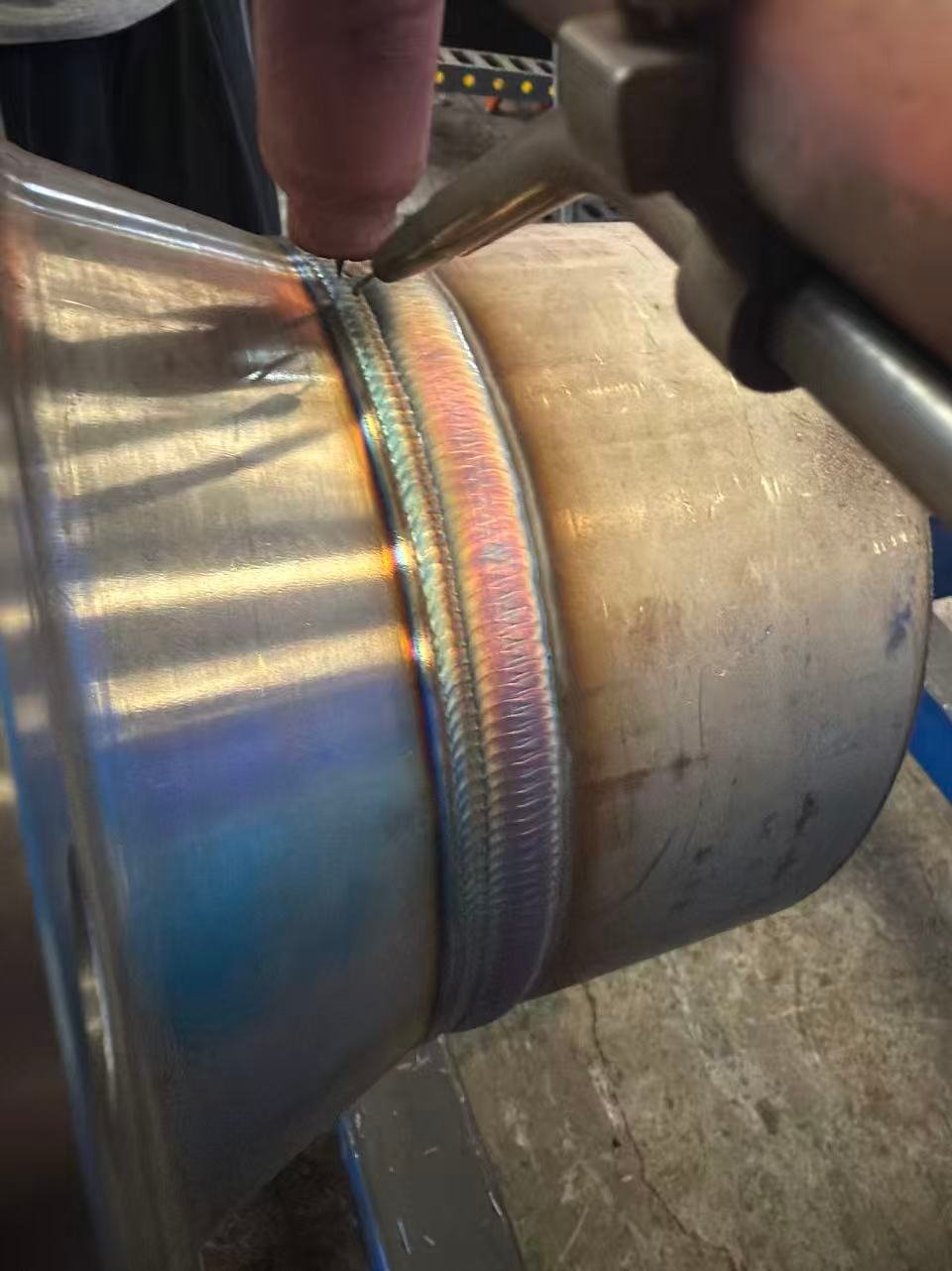
In automatic welding, there can be a very large gap between simply having a function and having a function that is truly effective and easy to use.
3. How to Use Automatic Welding Equipment Effectively
At the current stage of welding automation, automatic welding equipment still requires a certain level of consistency in incoming workpieces and joint preparation.
Important factors include:
- Bevel preparation
- Root gap
- Root face
- Joint alignment
- Pipe roundness
- Dimensional consistency
- Surface preparation
At present, it can be stated clearly that no automatic welding machine can completely replace the adaptive ability of an experienced manual welder under all possible joint conditions.
For the foreseeable future, automatic welding equipment should still be regarded as a tool.
A tool must be used by people.
The purpose of automation is to enable people to use equipment to increase production efficiency, improve repeatability, and create more value.
Unless every incoming workpiece is completely identical, there will always be some variation between individual joints.
Because of these variations, the operator may still need to make small real-time adjustments during welding to achieve the best result.
However, automatic welding equipment can significantly reduce physical workload and eliminate a large amount of repetitive manual work.
For example, consider a thick-wall pressure vessel nozzle that requires full TIG welding.
An experienced manual TIG welder may need four to five hours to complete the weld.
During this process, part of the time is inevitably spent on resting, repositioning, handling the torch, and other non-value-added activities.
With a suitable automatic welding machine, an operator who has received basic process training may be able to complete the same welding operation in approximately 2.5 hours.
More importantly, one operator may be able to supervise more than one machine at the same time.
This is one of the major productivity advantages of welding automation.
Automatic Welding Is Not Simply About Buying a Machine
Whether a factory should introduce automatic welding equipment is an important decision.
But how the equipment is managed and used after installation is equally important.
Purchasing an automatic welding machine does not automatically result in higher productivity.
How production managers, team leaders, welding engineers, and operators understand and use the equipment is critical.
Management should assign employees with different levels of experience to the positions where their skills create the greatest value.
Experienced welders should not spend all of their working time repeatedly performing the same physical welding movements.
Instead, their experience should be converted into:
- Welding parameters
- Welding programs
- Torch positions
- Oscillation parameters
- Layer and pass strategies
- Standardized welding procedures
The machine can then remember and reproduce the parameters and movements developed by experienced welders.
In this way, the machine becomes our hands for repetitive production, while people contribute their experience, judgment, and problem-solving ability.
A well-selected Automatic Pipe Welding Machine should reproduce stable welding parameters while allowing skilled operators to focus on process control, quality, and problem-solving. The real purpose of welding automation is not simply to replace people.
It is to use machines for repetitive physical work while allowing people to focus on the work that requires experience and judgment.
In other words:
Use the machine as our hands, and employ the human brain rather than human hands to create greater value.
Frequently Asked Questions (FAQ) About Automatic Pipe Welding Machines
1. What type of automatic pipe welding machine is best for pipe spool prefabrication?
For workshop pipe spool prefabrication, a horizontal automatic welding center is usually more suitable because the workpiece rotates while the torch remains relatively stationary, keeping the weld in a stable 1G position.
2. When should orbital welding be used for pressure piping?
Orbital welding is more suitable when the pipe or piping assembly cannot be rotated, such as during field installation, skid fit-up, restricted-access welding, or fixed pipe butt joints.
3. What is vertical rotary torch welding used for?
Vertical rotary torch welding is suitable for small-diameter and irregular pipe assemblies, including hydraulic piping, lubrication piping, bent tubes, and fittings located near the end of a pipe.
4. What should buyers compare when choosing an automatic pipe welding machine?
Buyers should evaluate both hardware and software, including mechanical accuracy, rigidity, adjustable axes, welding parameter control, AVC performance, multi-layer welding functions, ease of operation, and long-term repeatability.