
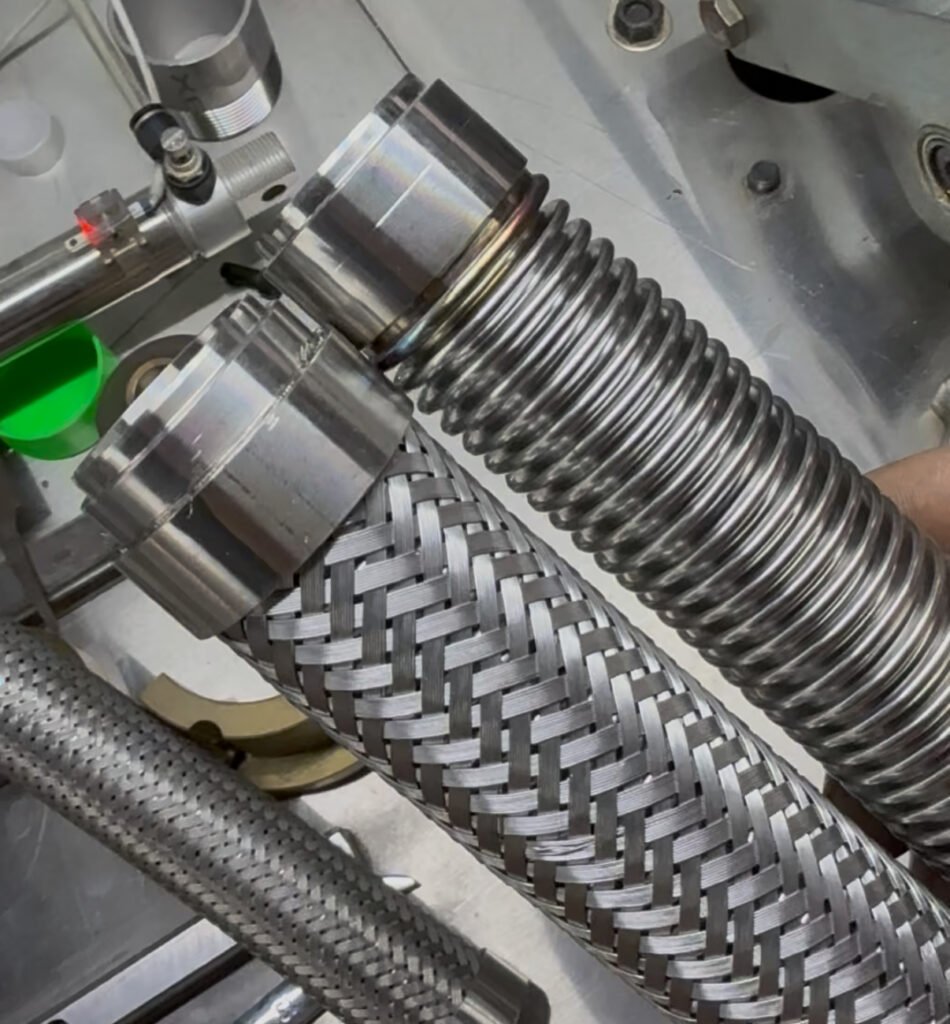
Why More Premium Metal Hose Manufacturers Are Choosing Two-Stage Welding
Automatic TIG welding for metal hose production has become an increasingly important solution for manufacturers seeking higher weld quality, stable production, and improved manufacturing efficiency.
Today, manual welding remains suitable for customized and low-volume products, while automatic welding has become the preferred solution for manufacturers seeking higher productivity, consistent quality, and repeatable weld performance.
The combination of both processes is driving continuous improvements across industries such as flexible hose assemblies, semiconductor equipment, vacuum systems, medical devices, instrumentation, and industrial fluid transfer.
Three Common Automatic Welding Processes for Metal Hoses
Metal hose automatic welding generally falls into three categories, Each automatic metal hose welding machine can be configured according to different hose structures and production requirements:
1. Cap Welding + End Fitting Welding
The most common process used for standard industrial hose assemblies.
2. Single-Pass Welding
Suitable for certain standardized hose structures with simplified assembly requirements.
3. Two-Stage Welding (Recommended for Premium Applications)
The hose are first welded directly to the end fitting, followed by a second welding operation after the braid and neck ring are assembled.
This process has become increasingly popular among professional metal hose manufacturers that require the highest level of weld quality and reliability.
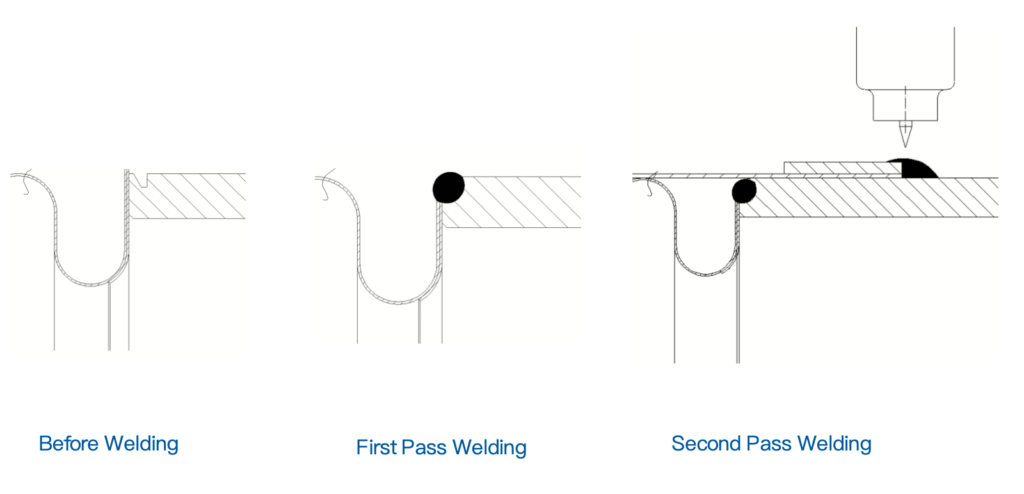
How Automatic TIG Welding for Metal Hose Uses the Two-Stage Welding Process
Unlike conventional welding, the two-stage process separates the welding operation into two independent steps.
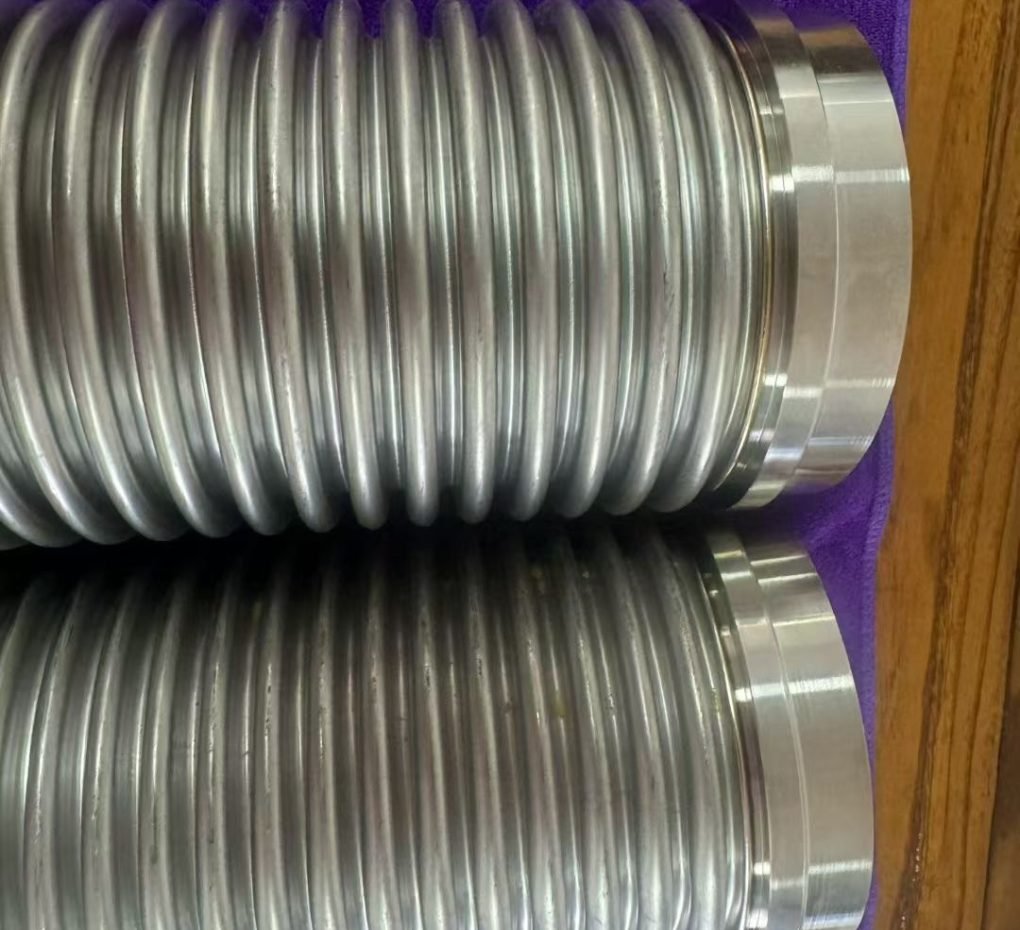
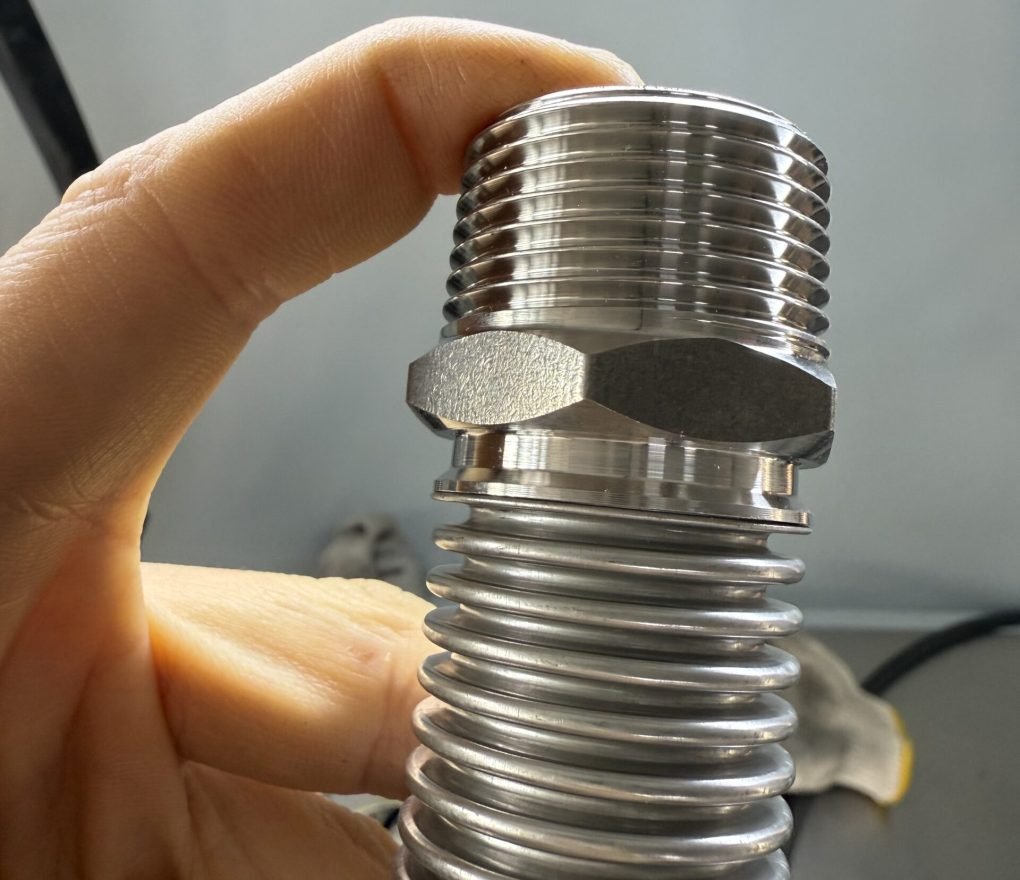
Step 1
The corrugated metal hose is welded directly to the end fitting using an autogenous TIG welding process without filler wire.
Because only the hose and fitting need to be fused together, the welding current remains relatively low while full argon shielding protects both the inside and outside of the weld.
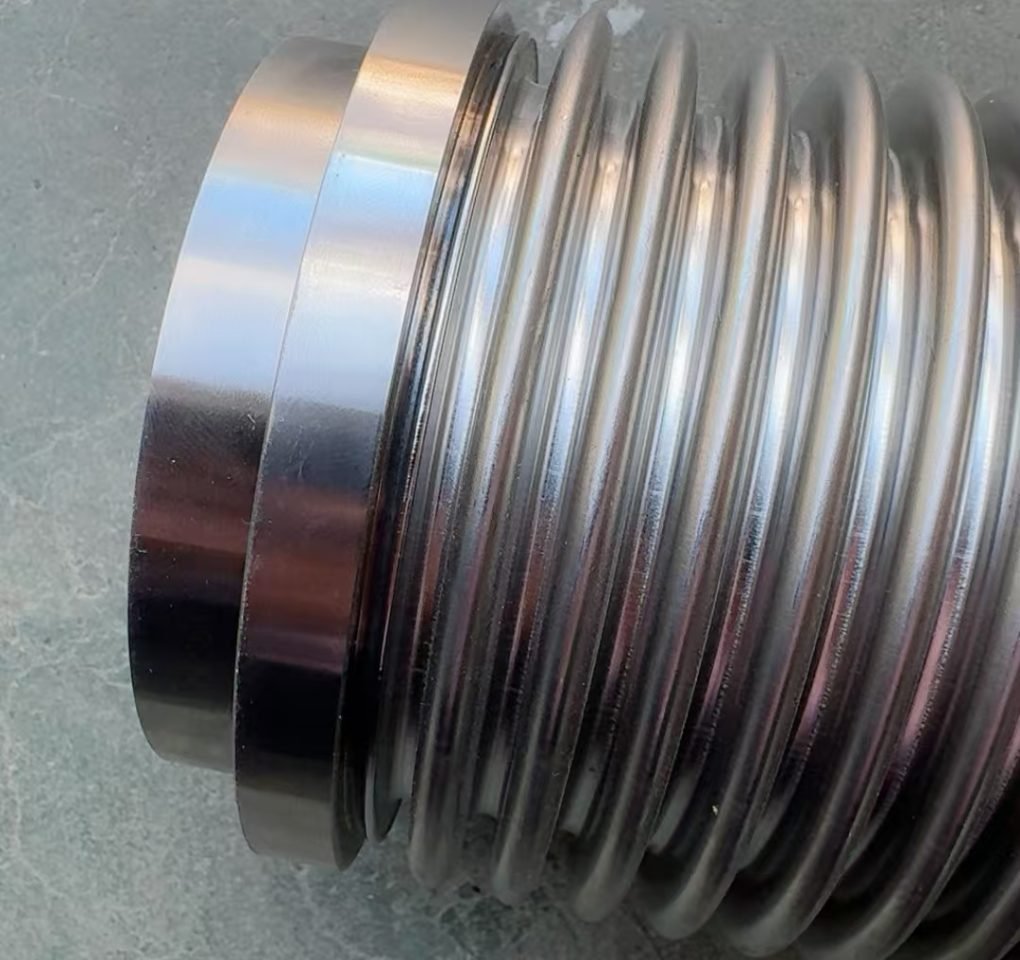
The result is:
- Bright silver weld appearance
- Minimal heat input
- Virtually oxidation-free internal surface
- Excellent corrosion resistance
This creates a high-quality semi-finished hose assembly.
Step 2
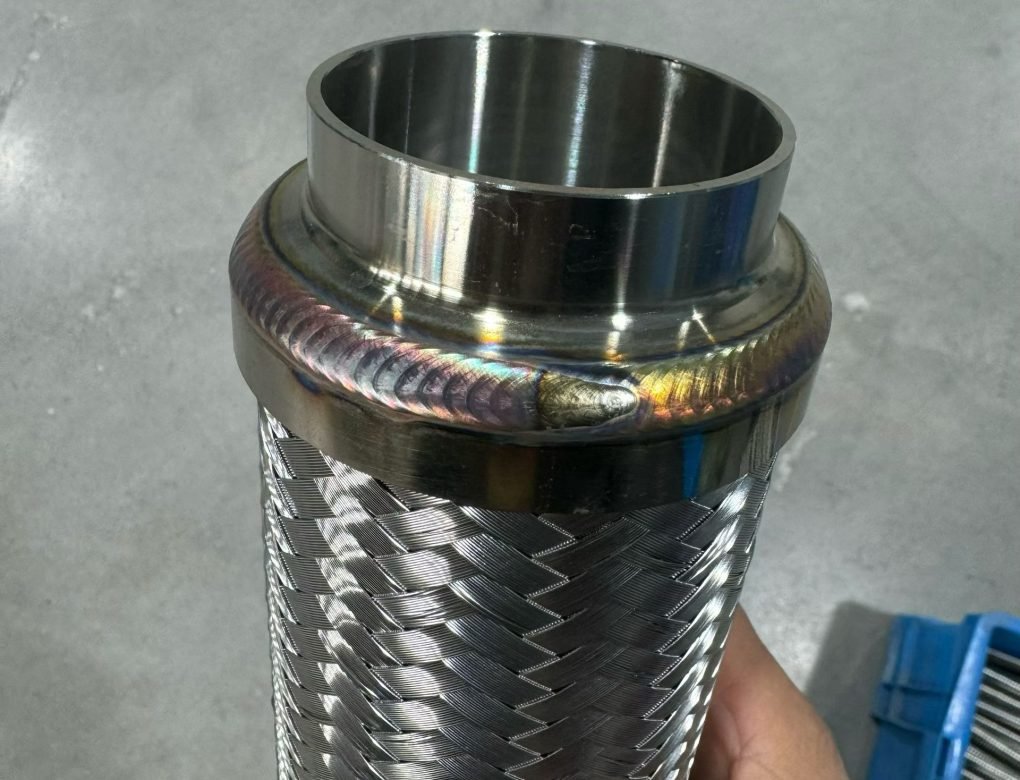
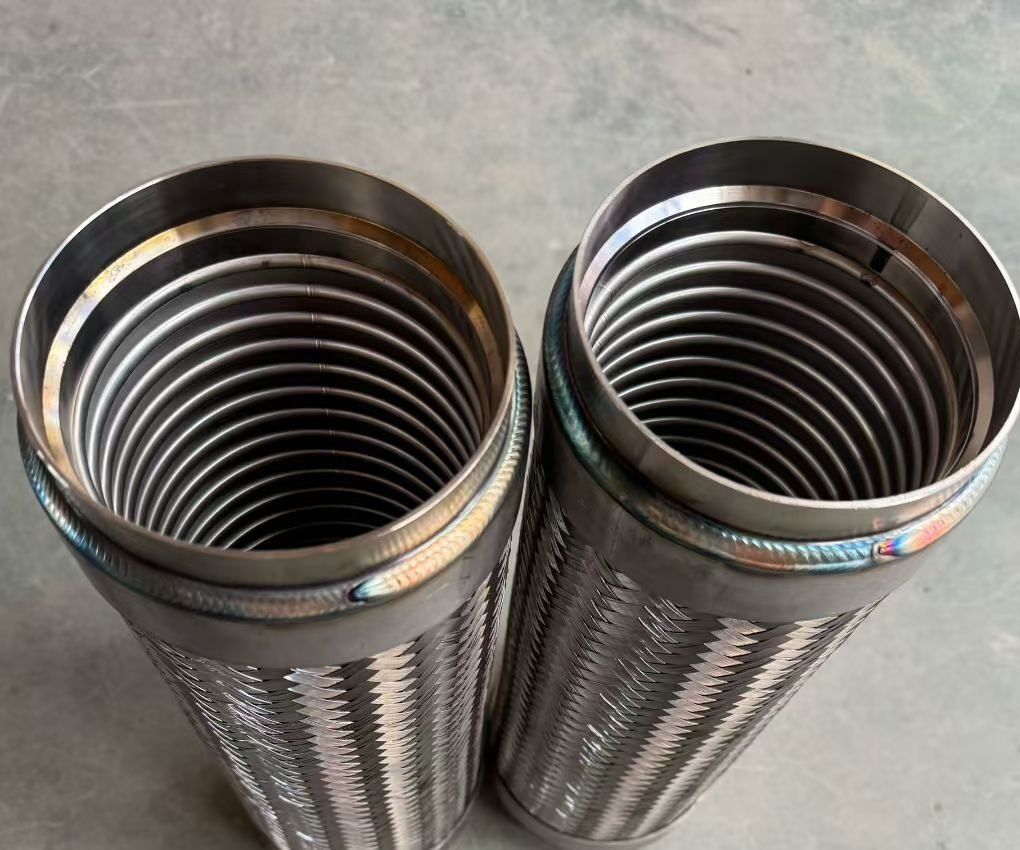
The braid and neck ring are assembled onto the semi-finished component and welded during a second operation.
Since the critical pressure boundary has already been completed during the first weld, the second weld focuses only on securing the remaining components.
Why Is It Better Than Conventional Cap Welding?
Traditional Cap Welding + End Fitting Welding requires several components—including the hose, braid, neck ring, and fitting—to be welded together in a single operation.
This usually requires:
- Higher welding current
- Filler wire
- Larger heat input
As a result, internal oxidation is difficult to avoid.
In fluid transfer applications, these oxidized layers may contaminate the process media, while long-term fatigue failures often initiate from heavily oxidized weld zones.
By separating the critical pressure weld from the structural assembly weld, the two-stage process significantly reduces these risks.
Typical Applications
Two-stage welding is recommended for industries requiring extremely high weld integrity, including:
- Semiconductor Equipment
- Vacuum Systems
- Medical Devices
- Aerospace & Defense
- Refrigeration & Vibration Isolation Systems
- High-Purity Gas Systems
- Process Instrumentation
- Flexible Metal Hose Assemblies
Key Advantages
✔ Near zero internal oxidation
✔ Bright silver weld appearance
✔ Superior weld consistency
✔ Higher fatigue strength
✔ Better vibration resistance
✔ Lower heat input
✔ Stable automated production
✔ Nearly 100% welding qualification rate under controlled production conditions
MecaNext Automatic TIG Welding Solutions
MecaNext specializes in metal hose automatic welding machines and automatic TIG welding solutions for flexible hose manufacturers.
- Metal Hose Cap Welding
- Two-Stage Welding
- Single-Pass Welding
- Automatic End Fitting Welding
- Hose Welding
- Orbital TIG Welding
- Automatic Wire Feeding
- AVC (Arc Voltage Control)
- Oscillation Welding
- Multi-layer & Multi-pass Welding
Whether you manufacture hydraulic hoses, industrial flexible hoses, semiconductor hoses, vacuum hoses, or process instrumentation assemblies, MecaNext can provide customized automatic welding solutions that improve weld quality, productivity, and manufacturing consistency.
If you are looking for automatic TIG welding for metal hose production, the two-stage welding process provides excellent weld cleanliness, stable quality, and reliable performance for demanding applications.
Frequently Asked Questions (FAQ) About Two-Stage Welding Process for Metal Hose
1. What is the two-stage welding process for metal hose?
The two-stage welding process for metal hose is an advanced TIG welding method that separates the welding into two operations. The bellows and end fitting are welded first, followed by the welding of the braid and neck ring.
2. Why is two-stage welding better than traditional cap welding?
Unlike traditional cap welding, the two-stage process separates the critical pressure weld from the assembly weld. This reduces heat input, minimizes internal oxidation, and improves weld reliability and fatigue resistance.
3. How does automatic TIG welding work in the two-stage welding process?
In the first stage, the corrugated metal hose and fitting are joined by autogenous TIG welding without filler wire. In the second stage, the braid and neck ring are welded to complete the hose assembly.
4. What are the main advantages of two-stage TIG welding for metal hose?
The process provides:
- Lower oxidation risk
- Cleaner internal weld surface
- Better fatigue strength
- Higher welding consistency
- Improved performance in demanding applications
5. Which industries use the two-stage welding process?
The two-stage welding process is widely used for high-reliability applications, including semiconductor equipment, vacuum systems, medical devices, aerospace, refrigeration, and high-purity fluid transfer systems.