

Automatic Welding Process for Vacuum Bellows and Semiconductor Flexible Assemblies
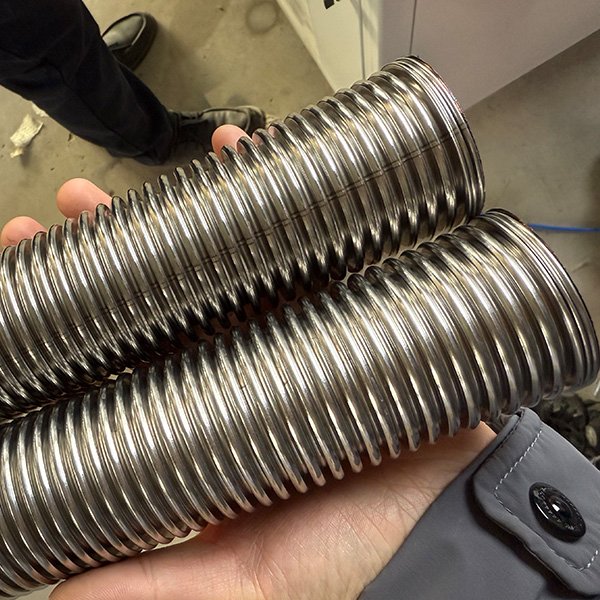
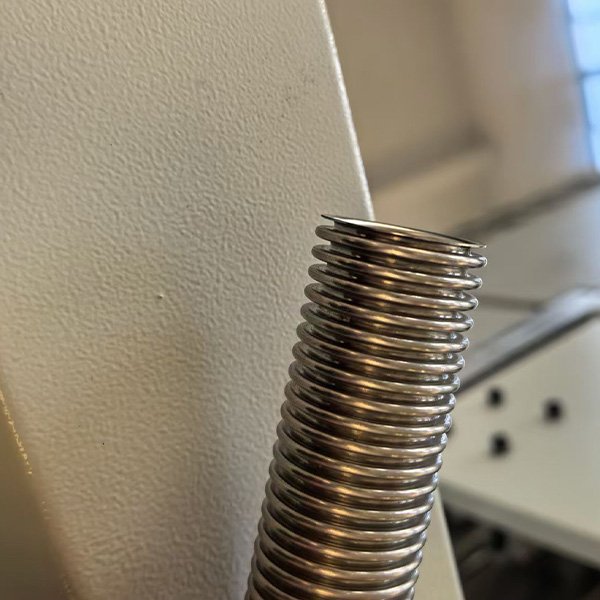
Vacuum Bellows Welding is a key process in manufacturing Semiconductor Flexible Assemblies and other vacuum-critical components. High-quality welds ensure vacuum integrity, cleanliness, pressure resistance, and long service life. Automated Vacuum Bellows Welding systems help manufacturers achieve consistent quality, higher productivity, and reduced labor costs.
To achieve consistent weld quality and high production efficiency, manufacturers increasingly adopt automated welding solutions throughout the production process.
At MecaNext, we provide a complete range of equipment for automatic manufacturing of vacuum bellows assemblies, from bellows preparation to final welding.
Step 1: Bellows Flattening
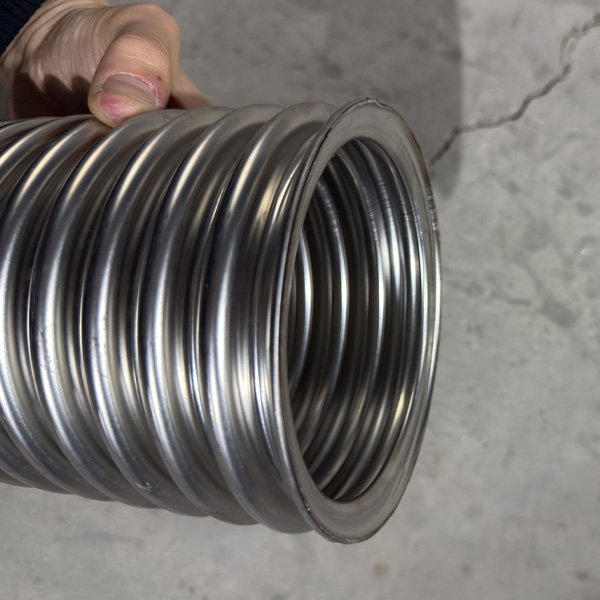
Before welding, the corrugated bellows is flattened to create a straight welding section.
Benefits of Bellows Flattening
- Eliminates gaps between the bellows and fitting
- Increases effective wall thickness at the weld joint
- Improves welding stability and repeatability
- Produces a cleaner and more attractive weld appearance
- Creates a wider straight section for subsequent machining and assembly operations
Bellows flattening is particularly important for thin-wall stainless steel bellows used in semiconductor and vacuum applications, where dimensional accuracy and weld consistency are critical.

Step 2: Half-Convolution Cutting (When Required)
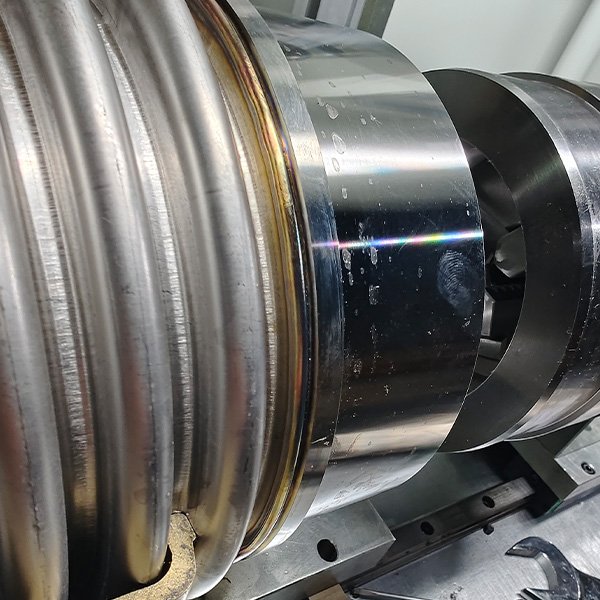
In some vacuum flexible assemblies, the fitting diameter differs significantly from the bellows diameter.
To create a smooth transition and improve weld fit-up, the bellows may require half-convolution cutting.
Advantages
- Matches the outer diameter of the bellows to the fitting
- Improves concentricity before welding
- Reduces welding distortion
- Enhances final weld quality and appearance
- Facilitates automated welding operations
This process is commonly used in vacuum bellows, semiconductor gas lines, and custom flexible connector assemblies.

Step 3: Automatic Bellows-to-Fitting Vacuum Bellows Welding
After preparation, the bellows and fittings are joined using an automatic orbital welding system.This stage is the core of the vacuum bellows welding process and determines the final weld quality and vacuum performance.
Depending on production requirements, product geometry, and budget, manufacturers can choose between:
Rotating Torch Welding
- Fixed workpiece
- Rotating welding torch
- Suitable for heavier components
- Ideal for complex vacuum assemblies
Rotating Workpiece Welding
- Rotating bellows assembly
- Fixed welding torch
- High efficiency
- Excellent weld consistency
- Commonly used for mass production
Welding Processes Available
- Automatic TIG (GTAW) Welding
- Orbital TIG Welding
- Autogenous Welding (without filler wire)
- TIG Welding with Filler Wire
- Multi-pass Welding for thicker components
Automated Welding Ensures:
- Consistent penetration
- Repeatable weld quality
- Reduced operator dependency
- Improved productivity
- Better vacuum leak performance

Step 4: Secondary Welding of Braid and Neck Ring Assemblies
For flexible metal hoses and vacuum assemblies incorporating external wire braid reinforcement, a secondary welding process is required.
After the bellows-to-fitting weld is completed:
- The braid is expanded and positioned.
- The neck ring is assembled.
- The braid and neck ring are welded to the fitting.
This secondary weld provides:
- Mechanical reinforcement
- Pull-out resistance
- Pressure containment
- Long-term durability
Automated vacuum bellows welding systems can significantly improve production consistency compared with manual welding.
Complete Automatic Welding Solutions for Vacuum Bellows Manufacturing
MecaNext supplies a complete range of equipment for vacuum bellows and semiconductor flexible assembly production, including:
- Bellows Flattening Machines
- Half-Convolution Cutting Machines
- Orbital TIG Welding Systems
- Automatic Circumferential Welding Machines
- Bellows-to-Fitting Welding Equipment
- Braid and Neck Ring Welding Systems
- Leak Testing Equipment
- Custom Automated Welding Solutions
Our systems are designed for:
- Semiconductor Vacuum Components
- Vacuum Bellows Assemblies
- Flexible Metal Hoses
- Ultra-High Purity (UHP) Tubing
- Gas Delivery Systems
- Cryogenic Piping
- Stainless Steel Flexible Connectors
Whether you are producing small-batch high-mix assemblies or high-volume standardized products, modern vacuum bellows welding technology can significantly improve productivity, weld consistency, vacuum performance, and product reliability.
In modern semiconductor and vacuum industries, vacuum bellows welding plays a critical role in ensuring product reliability, vacuum integrity, and manufacturing efficiency. By combining bellows flattening, half-convolution cutting, automatic orbital TIG welding, and secondary reinforcement welding, manufacturers can achieve consistent weld quality, higher productivity, and improved long-term performance for semiconductor flexible assemblies and other vacuum-critical components.

Frequently Asked Questions (FAQ)
What is vacuum bellows welding?
Vacuum bellows welding is the process of joining metal bellows to fittings or other components used in vacuum systems. It requires high weld precision to ensure leak-tight performance, structural strength, and long service life.
Why is orbital TIG welding commonly used for semiconductor flexible assemblies?
Orbital TIG welding provides highly repeatable weld quality, precise heat control, and excellent cleanliness. These advantages make it ideal for manufacturing semiconductor flexible assemblies used in high-purity and vacuum applications.
When is half-convolution cutting required?
Half-convolution cutting is typically required when the fitting diameter differs significantly from the bellows diameter. The process improves fit-up, concentricity, and overall weld quality before welding.
What industries use vacuum bellows and semiconductor flexible assemblies?
Vacuum bellows and semiconductor flexible assemblies are widely used in semiconductor manufacturing equipment, vacuum systems, gas delivery systems, cryogenic piping, ultra-high purity (UHP) tubing, and other high-performance industrial applications.
What equipment is required for a complete vacuum bellows welding process?
A complete production line may include bellows flattening machines, half-convolution cutting machines, orbital TIG welding systems, bellows-to-fitting welding equipment, braid and neck ring welding systems, and leak testing equipment.